July is coming to an end but this time Barkha Rani is upset. There was no rain anywhere in the Ganga-Yamuna plains. However, the rain definitely showed its fierce form in Mumbai and North Eastern states. But it has definitely rained for a few days in the entire plains from Delhi to Kolkata. Everything else is silent. The humidity and continuously rising mercury have made people miserable. Hospitals are filled with patients suffering from food poisoning and vomiting and diarrhea.
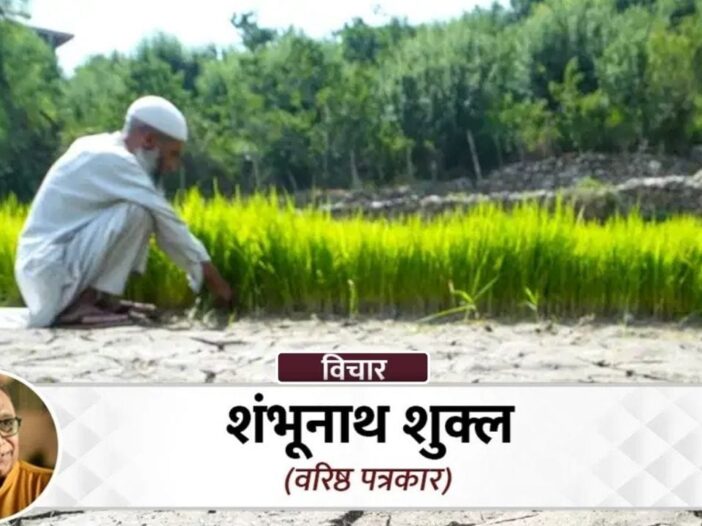
This is the first time in the last decade that July is going dry. Farmers’ fields are lying dry and with no hope of rain, it is difficult to even sow seeds in the fields. If the weather continues like this for another week then there is every possibility of drought this time. That is why there are lines of worry on the foreheads of farmers everywhere in the country. How will they be able to sow their crops without rain?
Rain is the basis of agriculture in India
Rain is the basis of agriculture in the entire Indian subcontinent. If there is no rain, then there is a drought. Here the entire economy depends on agriculture. Agriculture provides employment to 40 to 50 percent of the country’s people. Trade and industry are also dependent on agriculture, because most of our imports are of raw materials and agricultural produce. Today, if we are the fourth largest economy in the world, then one of its pillars is agriculture.
Modern agriculture has increased the yield and hunger has ended from the country. But if the rain cheats, it will have a serious impact on the yield. Feeding such a huge population is also a problem. It is the effect of new agricultural technology, advanced seeds, fertilizers and pesticides that the country has been self-sufficient in food grains in the last 50 years. But drought like this year has rarely been seen in the past.
El Nino effect
El Nino affects rainfall the most. Scientists had expressed the possibility of El Nino in the year 2026. But the way the monsoon gained momentum in the first week of July, it seemed that perhaps the effect of El Nino had slowed down. But after July 10, the monsoon cooled down and the heat started showing its fiercest form. Then there is bound to be a wrinkle on everyone’s forehead.
There is no doubt that the pressure of cold winds coming from the Mediterranean Sea has reduced, but the impact of global warming is also no less. Carbon emissions and heat are continuously being generated in the atmosphere. Due to this also, the water from monsoon clouds evaporates before reaching the ground. In a way, we have also done the work of putting brakes on the rain clouds. The reason for this drought is as much natural as it is artificial.
canadian forest fires
The heat is also an indication that if we allow the atmosphere to continue warming, drought may continue for years to come. The situation is bad all over the world. There is currently a wild fire in the forests of Canada. Due to this, Ontario in Canada and New York and Pennsylvania in America are experiencing severe heat. Due to smoke, the Air Quality Index (AQI) there has reached dangerous levels.
Although the government of Vahan is engaged in extinguishing the fire, this fire has engulfed about 850 forests. Therefore the only recourse is rain. Although the weather cycle of Canada and USA is not like our country. There is no rainy season and rain can come anytime. Even in the terrible winter and in the summer of July-August. But this man-made heat has increased the temperature around the world.
Uneasiness in cities due to heat
In the rainy months, whether it rains or not, the temperature goes up to 40 degrees. Lack of rain during the rainy months increases the humidity of the atmosphere and on top of that the rise in mercury makes people restless. It is very difficult to live in cities in such weather. Most of the cities of North India no longer have green belts and water sources. They were either encroached upon by the people or used by the local administration for filling garbage.
In such a situation, the heat irritates the city residents also. On top of this, electricity supply also keeps getting disrupted in every city. This situation has made the situation even more restless, whereas in our epics and our tradition, rainy season is considered to be the most beautiful season. This season has been described as pleasurable for the Kamijans. When it is raining heavily, the sadness of Birhani is disturbing. That is, the rainy season makes one restless for a meeting.
season of love
The rainy season in India has always been attractive. If it rains heavily, the mood of any Indian becomes happy and if there is no rain, everyone becomes distressed. Monsoon in India is the season of expression of happiness and love. Although spring is considered the season of love in western countries, in India it is the season of rain.
From Kalidas to Malik Mohammad Jayasi, the rainy season was considered a symbol of love because rain brings happiness. The great poet Kalidas, while describing the rain in Ritu Sanhar, has written, when the sky is covered with clouds, even the peacock birds start dancing happily. Relieving winds blow and there is greenery all around the earth. Kadamba flowers bloom. Kalidas has seen and written about rain by connecting it with human feelings and emotions.
king of seasons
Kalidas considers rain as the king of seasons. He writes, when it rains, it seems that the rolling gray clouds look like a king’s dust-blowing army. Which covers the entire sky. The thunder of lightning appears like the drums of war. During the rainy season, a sweet smell of soil in the dust intoxicates every person.
If there is no rain, our seasonal cycle will get disturbed. In India, all the seasons come in turn with the monsoon. Because India is a tropical country. The humid heat here is severe. In such a situation, rain itself attracts the mind and also brings cold and heat. India’s happiness and prosperity also depends on the rainy season. Being a country based on agriculture, it is difficult to imagine agricultural production here without rainfall. That is why rain has been called the king of all seasons.
season of separation and union
In the medieval period, Malik Mohammad Jayasi and Tulsi also did not neglect the description of rainfall. Nagmati gives a very poignant description of rain in the separation section of Padmavat. It has a wonderful depiction of the separation and union of the heroine. At the time of separation from her husband Ratansen, rain becomes painful for her and at the time of reunion this same rain becomes pleasant for her.
Describing the arrival of rainy season, Malik Mohammad Jayasi has written, ‘Chadha Ashadh Gagan Ghan Gaza, Saja Birah Dund Dal Baja’. Saint poet Tulsidas also did not hesitate in describing the rain. He has written extensively on rain in Kishkindha Kand of Ramcharit Manas. They also show the rainy season as a form of separation and its yearning. When the clouds of the rainy season cover the sky and thunder and rain. Then Tulsi writes, ‘Ghan pride garjat nabh ghora, priya heen fearpat ji mora.’

Leave a Reply