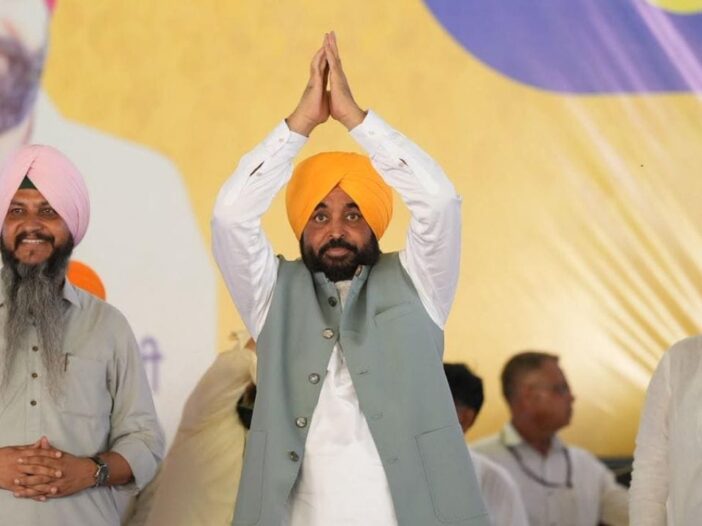
Further strengthening its commitment to adopt a holistic approach to combat drug addiction, the Punjab Government launched the country’s first fellowship against drug addiction, Leadership in Mental Health Program (LMHP) in February 2026. The 13 fellows from the first batch of this program are now working across Punjab and playing a key role in strengthening mental health services.
LMHP Fellow Chief Minister Bhagwant Maan The NDA-led War Against Drugs campaign is supporting health services across the state and strengthening the health and community-first approach in the fight against drugs.
Application process is about to start
This is an important step towards strengthening the state’s mental health system and ensuring that rehabilitation remains the core of Punjab’s anti-addiction campaign. Now, the Punjab government is opening the application process for the second batch of this program – 10 Fellows and 7 Senior Associates – aimed at creating a strong network of trained young professionals across all 23 districts of the state.
Operating under the Department of Health and Family Welfare and in close collaboration with the State Data Intelligence and Technical Support Unit (DITSU), LMHP aims to develop a team of skilled mental health leaders who can effectively lead evidence-based drug prevention and rehabilitation activities across the State.
Took part in anti-drug campaign for two years
LMHP Fellows are professionals from diverse fields such as psychology, public health and social work, who have pledged to contribute to the state’s anti-drug campaign for two years. Selected after a rigorous selection process, these fellows receive intensive training in psychological and social support, relapse prevention, program management, community-based rehabilitation and leadership skills. The training, program selection and learning are conducted in collaboration with partner Tata Institute of Social Sciences (TISS), Mumbai.
Health and Family Welfare Minister Dr. Balbir Singh said that War on Drugs is not just a campaign against drugs but a mass movement to bring the youth of Punjab back on the right path. On one hand, we are taking tough action against drug smugglers and drug networks, while on the other hand, we are equally committed to ensure that every drug addict gets an opportunity to return to a dignified life and to prevent the youth from falling into the trap of drug addiction.
The Leadership in Mental Health Program embodies the belief that Punjab can be drug-free only when legal action, treatment and prevention work together with a strong health system and community support.
drug addiction long term health problem
He further said that drug addiction is a long-term health problem, which requires constant care. During their posting in various district hospitals and de-addiction and rehabilitation centres, these fellows gain practical experience in understanding the problem of drug addiction not just as an individual disease but as a social challenge.
They communicate with families, help mitigate family crises caused by addiction, connect patients to treatment, support relapse prevention, and promote integrated rehabilitation. Additionally, they pay special attention to reducing social stigma, increasing community involvement, and ensuring continued care for patients after completing the drug rehabilitation program.
Apart from providing leadership at the district level, the first batch of LMHP Fellows are also playing a vital role in supporting health workers, improving the quality of services and institutionalizing effective practices in the anti-drug campaign.
Learning to stay away from drugs and drug abuse
The first batch of the Leadership in Mental Health program is bringing positive change in the way society understands and tackles addiction and substance abuse. Putting mental health at the center of its war on drugs, Punjab believes that the fight against drugs is not limited to just stopping its supply, but also an effort to heal the minds of people, reunite families and give them a new life with sensitivity and care.

Leave a Reply