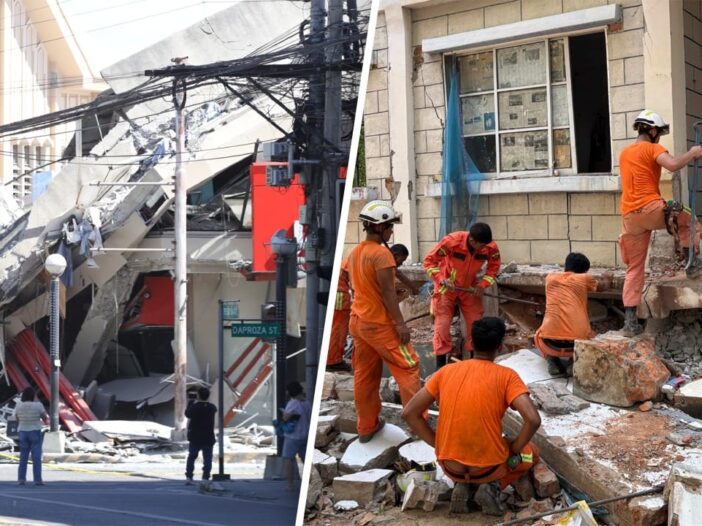
On Wednesday evening, two consecutive severe earthquakes have caused a lot of devastation in Venezuela, about 15 thousand kilometers away from India. The earthquake has caused massive damage to many cities including the capital Caracas. Many buildings were destroyed. Big cracks are being seen in the roads at many places. Relief and rescue work is going on. Thousands of people are reported to have died in the earthquake. Along with Venezuela, a large-scale earthquake occurred in Japan too, but there is no news of any loss of life or property there.
In Venezuela, these two strong earthquakes of 7.2 and 7.5 magnitude created a stir in the entire region, due to which buildings had to be evacuated in many cities, its tremors were felt up to 2 thousand kilometers away in the Amazon of Brazil. The country’s acting President Delsey Rodriguez, in his brief address to the nation late last night, said that these earthquakes have caused damage in many states, but did not give detailed figures of the damage. What did Japan, a small country that faces frequent earthquakes, do in its country, from which all the countries of the world including India should take a lesson?
Japan’s policy to reduce destruction
It is not possible for anyone to prevent an earthquake, but the devastation can definitely be reduced by making preparations for it. Japan works on this principle. Japan has built earthquake resistant buildings. Technologies like Base Isolation, Seismic Dampers and Flexible Steel Structure are compulsorily adopted in these buildings.
Besides, strict building codes are also followed. Rules are strictly followed during the construction of buildings in Japan. Strict action is also taken if rules are broken. Also, attention is paid to the strength of old buildings. This means that not only new buildings, but also old buildings are made earthquake resistant by doing seismic retrofitting.
Regular mock drills and consistent practice
As soon as the initial tremors of the earthquake are detected, an early warning system is issued a few seconds in advance through mobile phones, TV, radio and public alert system. Apart from this, regular mock drills are also conducted. Earthquake safety drills are conducted from time to time in schools, offices, hospitals and government institutions.
Also, if public awareness campaign is conducted regarding earthquake in Japan then it is the biggest strength. From children to the elderly, everyone is taught what to do and what not to do in case of an earthquake. Emergency Kit is always ready. Every family has an emergency bag ready with water, dry ration, torch, medicines, power bank, radio and important documents.
Response system in alert mode all the time
The emergency response system also remains very alert. In the event of an earthquake, relief and rescue agencies, fire brigades, medical teams and the army become active within minutes. Apart from this, technique and discipline means less loss. The biggest lesson of Japan is that not only technology, but strict laws, better urban planning and discipline of citizens together prevent even the biggest earthquake from turning into a major humanitarian crisis.

Leave a Reply