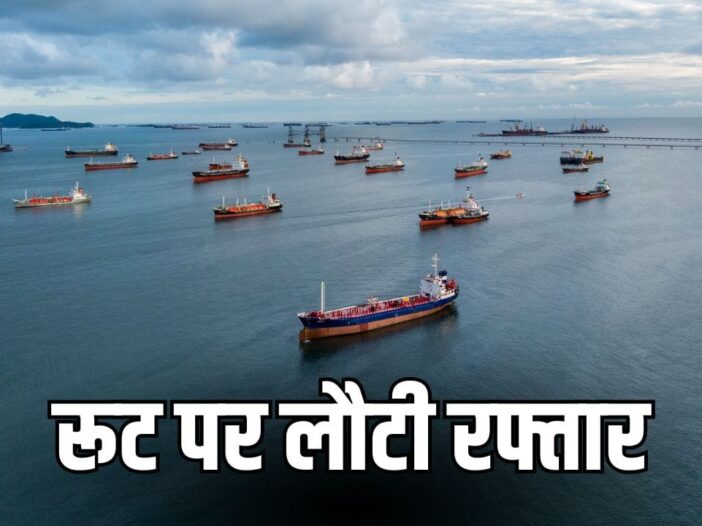
Amid tensions related to Iran and fears of war, the sea route on which the world was keeping an eye on, is now seeing increasing activity. The movement of ships through the Strait of Hormuz, which connects the Persian Gulf and the Arabian Sea, has started increasing again. According to the latest data, about two dozen commercial ships have passed through this route in the last 24 hours. That means on an average one ship is passing through Hormuz every hour.
The Strait of Hormuz connects the Persian Gulf to the Arabian Sea and a large part of the world’s oil reaches other countries through this route. According to the information, these ships include both oil carrying tankers and cargo ships. In the last 24 hours, 8 oil tankers and 2 cargo ships left the Persian Gulf, while 8 oil tankers and 6 cargo ships entered the Gulf. This number is higher than the last few months.
Earlier 110 ships used to pass through
In fact, after the conflict related to Iran that started in late February, the movement of ships on this sea route had reduced significantly. Due to security reasons and increasing tension, many shipping companies had become alert. Although, before the war, an average of 110 ships passed through Hormuz every day, but later this number had reduced significantly. Another big problem in the last few months has been GPS spoofing. In this, disturbances are created in the navigation systems of ships, due to which their location appears incorrect. Due to this, concerns regarding the safety of ships had increased. However, in recent times there has been a decline in such incidents.
is an important sea trade route
The Strait of Hormuz is counted among the most important maritime trade routes in the world. A large part of the oil and gas of the Gulf countries reaches different countries of the world through this route. Therefore, the increasing movement of ships here is being considered as a relief news for the global trade and energy market. At present, the world’s eyes are on this route, because every change here can affect oil prices and international trade.

Leave a Reply