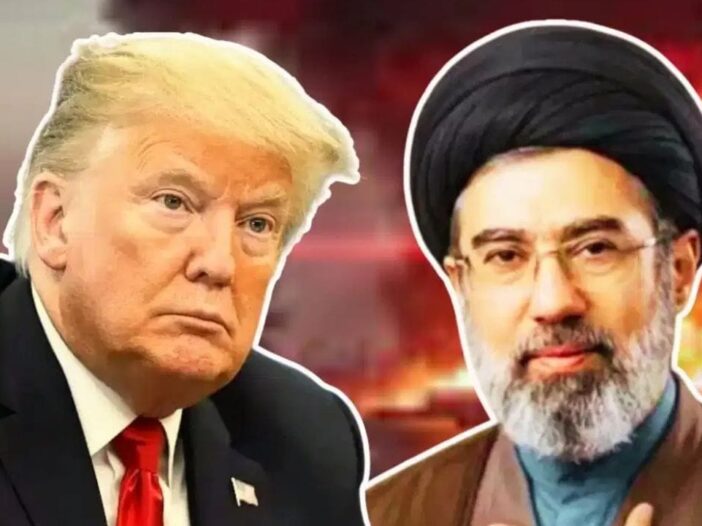
After the agreement between Iran and America on June 17, tension between the two countries has once again increased. The biggest reason for this is the Strait of Hormuz and Article 5 of the agreement. Both countries are accusing each other of violating this agreement. The Strait of Hormuz is one of the most important sea routes in the world. Iran had earlier blocked this route, due to which hundreds of cargo ships got stuck and created an oil crisis in the world. After this an agreement was reached between the two countries.
Article 5 of the agreement states that Iran will provide safe passage to merchant ships between the Persian Gulf and the Gulf of Oman for 60 days without any additional charges. Also, within 30 days the sea mines laid in the sea will be removed and other military obstacles. But the dispute is over who will have control of the Strait of Hormuz.
Iran does not want interference in Hormuz
Iran says that the security and surveillance of this entire area is its responsibility. At the same time, America wants that the movement of ships should remain completely free. Oman and International Maritime Organization (IMO) should also have a role in this. Iran considers this an interference in its rights. Tension increased further when a ship passing through Hormuz was attacked on Friday. In response, America attacked Iran, although Iran did not take responsibility for the attack on the ship. After this both the countries accused each other of breaking the agreement.
Iran’s Foreign Minister Abbas Araghchi said that the management of the Strait of Hormuz is entirely Iran’s responsibility and any external interference will worsen the situation. On the other hand, America is trying to prepare an alternative sea route, due to which Iran is angry.
Iran pointed the way for the ships
Iran’s Revolutionary Guard (IRGC) warned that ships should only pass through the Northern Sea Route designated by Iran. Due to this many oil tankers had to change their route. Two ships named Ever Lovely and Kiku also fell victim to the attacks.
The impact of these incidents was clearly visible on maritime trade. While 70 ships passed through Hormuz on Wednesday, by Saturday this number had come down to only 40. Due to this, concerns about oil supply and prices have increased in the world. However, defense experts believe that both the countries currently want to avoid a major war and the possibility of talks still remains.
Also read: Why is Israel fanning the spark of the First World War? Conflict with Turkey will increase

Leave a Reply