The effects of the diplomatic and strategic campaign that India had started against Pakistan after the brutal killing of 26 innocent civilians in the Pahalgam terrorist attack, are now visible on the ground. India, which has shown generosity and restraint for decades, has made it clear that terrorism and cooperation cannot go together. After the suspension of the Indus Water Treaty by the Indian Government, work has now started at a rapid pace on those schemes, the aim of which is to utilize India’s share of water more for the country’s farmers, industries and energy production.
65 years of treaty and changing scenario
Under the Indus Water Treaty signed between India and Pakistan in 1960, special provisions were made regarding the water use of Indus, Jhelum and Chenab rivers. Most of the water of these rivers continued to reach Pakistan, while India was allowed limited use. But after the Pahalgam terrorist attack, India clearly said that “blood and water cannot flow together.” India’s message was clear that if Pakistan continues to support terrorism, normalcy cannot continue with it.
Preparation to use Chenab water in national interest
The Government of India has now taken major steps to better utilize the water resources associated with the Chenab River system. According to the plan, the process of connecting the waters of Chandra River flowing in Lahaul-Spiti region of Himachal Pradesh to the Beas River system through tunnels has been approved. With this, excess water can be used for irrigation in dry areas of the country including Rajasthan. Experts believe that this project can prove important for water management and agriculture sector in future.
Water storage capacity will increase in Salal and Baglihar projects
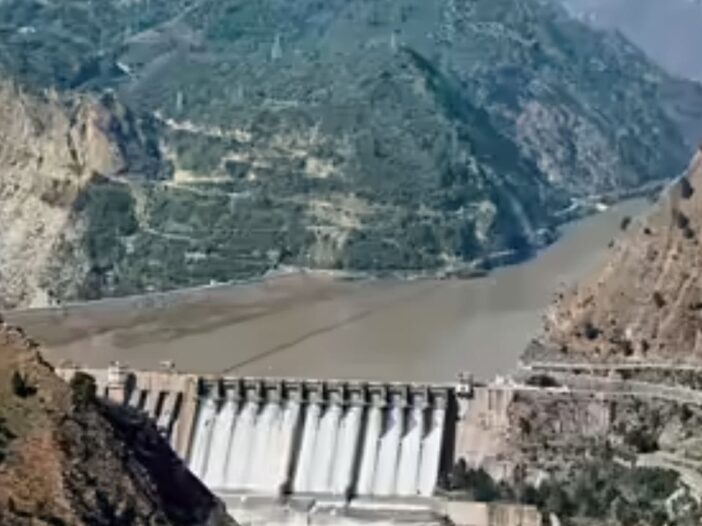
Due to the restrictions of the Indus Water Treaty, the process of completely removing the silt accumulating in the reservoirs of Salal and Baglihar hydroelectric projects located in Jammu and Kashmir was limited for years. Now India is going to do desilting, dredging and flushing work on a large scale in these reservoirs. Desilting and dredging work is already being done on the reservoir built on the election river, but the flushing work was not done yet because the gate below the reservoir built on the election river has to be opened.
For this, permission had to be taken from Pakistan and Pakistan never allowed these gates to be opened and had them locked permanently. But now, after the end of the Indus Water Treaty, the Government of India is preparing to completely remove the silt stuck in the reservoir by opening the gates below these reservoirs. This will increase the capacity of water storage in these reservoirs and India will now be able to use the water stored in these reservoirs to generate electricity. This means that this process will increase the storage capacity of the reservoirs, improve electricity production and make more effective use of water resources possible in the future.
Strong message for Pakistan
This step of India is not only a matter of water management, but it is also being considered as a clear strategic message. New Delhi is indicating that if the neighboring country keeps terrorism a part of its policy, then its consequences will not be limited to the border only.
For decades, India showed generosity, respected agreements and tried to improve neighborly relations. But terrorist attacks against innocent civilians have changed the circumstances.
What is the lesson?
The biggest mistake is to consider the goodwill of any nation as its weakness. India has once again shown that it wants peace, but will not compromise on its security and national interests. If terrorism is promoted, it will be answered not only on the military front but also at the diplomatic, economic and resource management levels.
Today India is moving towards using the water of its rights for its farmers, its youth and its development. This is not just a story of water, but a story of national resolve, self-reliance and a strong message against terrorism.

Leave a Reply