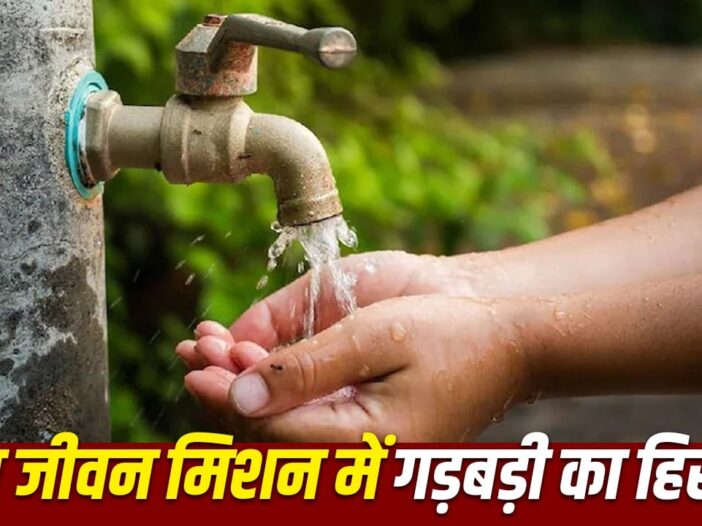
Jal Jeevan Mission, started to provide tap water to every rural household in the country, is ranked as one of the largest drinking water schemes in the world. The government claims that by July 15, 2026, 15.89 crore rural families will have got tap water at every door. But many irregularities also came to light during the implementation of this scheme. The Jal Shakti Ministry itself gave its answer in the Rajya Sabha.
In response to a question in the Rajya Sabha on July 20, 2026, the Jal Shakti Ministry said that 18,790 complaints were received from across the country. On the basis of this, action was taken against 1,810 officers, contractors and third party agencies. After all, what kind of complaints were these, on what action was taken and how many people benefited from this scheme?
How many complaints and irregularities were faced in Jal Jeevan Mission?
According to the Jal Shakti Ministry, so far 18,790 complaints have been received by the states and union territories under the Jal Jeevan Mission. These complaints were received through many mediums. These include media reports, complaints from citizens, grievance portal and suo motu. However, not a single case has been found under corruption, all complaints are related to financial irregularities and quality of construction works, which are investigated and action is taken by the respective states.
What kind of errors were encountered?
- Financial irregularities – Cases of irregularities in the use of government funds, payment irregularities and violation of financial procedures have come to light.
- Poor construction work – Complaints were received about poor quality of pipelines, sub-standard construction, incomplete or faulty work.
- Irregularities related to tender- Irregularities in the tender process, allegations of violation of rules, questions on financial transparency have come to light.
- Technical deficiencies- Complaints were received regarding issues like flaws in the design of projects, non-adherence to technical standards.
- Flaws in implementation – Delay in implementation of schemes, non-proper completion of projects, lack of monitoring came to light.
- Public complaints- complaints related to water supply, objections of local people on construction works.
- Suo Motu Cases – Other Administrative Complaints
How many people were taken action against?
Based on the complaints, states and union territories have taken action against 1,810 officials, contractors and inspection agencies. Of these, there are 635 departmental officers. Contractors are 1,020, Third Party Inspection Agencies (TPIA) are 155. During this period, suspension of departmental officers, departmental investigation, chargesheet, contractors
Actions like blacklisting, termination of contract, debard, confiscation of security/EMD, financial penalty, removal from panel on third party inspection agencies, show-cause notice, recovery were taken.
How is monitoring being done by the government under Jaljeevan Mission?
Jal Shakti Ministry said that arrangements have been made at many levels to monitor the work of Jal Jeevan Mission. Site inspection is carried out by Central Nodal Officers (CNOs). Technical teams visit the site and conduct physical verification. The scheme is monitored through a digital assessment framework. Real time updates about the progress of the scheme are made on the JJM-IMIS portal. Quality testing is done through national wash experts.
In its reply, the government said that by July 15, 2026, 82.3 percent of the total 19.36 families i.e. 15.89 crore families have reached every household under the Jaljeevan Mission. If on an average there are 5 members in a rural family, then an estimated 76 to 79 crore people are living in such families where the benefits of this scheme have reached.
Jal Jeevan Mission is one of the largest rural drinking water schemes in the world. Through this, water is reaching crores of homes. In such a situation, due to poor quality of construction, irregularities in the tender process, lack of proper implementation of financial management and monitoring, the facility of tap water to every house of crores of beneficiaries may be affected. Large scale disturbances can also lead to drinking water crisis for some time.
Why is it important for Jal Jeevan Mission to be successful?
For years, in lakhs of villages across the country, people, especially women and children, had to travel long distances to get drinking water. This affected time, education, health and livelihood. If Jal Jeevan Mission reaches the last person of the country then they can get relief from drinking water crisis. Easy availability of water can also improve their quality of life.

Leave a Reply