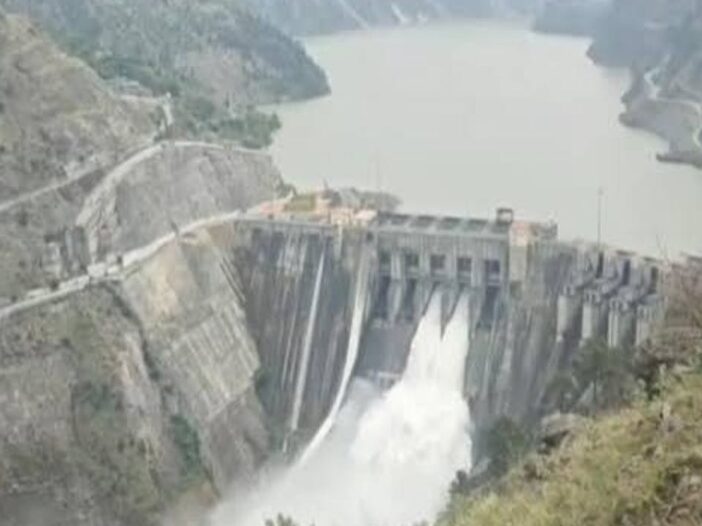
Reasi district administration of Jammu and Kashmir has issued an important advisory regarding the rising water level of Chenab river. According to the administration, the process of removing silt (Reservoir Silt Flushing) is being started from the reservoir at Salal Power Station, Jyotipuram and Baglihar Dam, Ramban. Due to this, the water level of Chenab river may rise suddenly, hence people have been advised to avoid going to the banks of the river.
According to the advisory, the spillway gates of Salal Dam will be opened from 9 am on July 17 to July 26 for desilting. Drawdown flushing will start in Baglihar Dam from around 10 pm on 16th July. Actually, the gates of Baglihar Dam have been opened from time to time for flushing, but the case of Salal Dam has been different. Due to the provisions of the Indus Water Treaty, regular flushing could not be done in Salal Dam for years.
India has been saying that due to the treaty, there were practical limitations on removing silt deposited in the dam, which also affected the capacity of the reservoir. Now after the suspension of Indus Water Treaty by India, the work of desilting in Salal Dam is being done continuously. In this sequence, the spillway gates of the dam are being opened once again, so that the silt accumulated from the reservoir can be taken out.
These areas may be affected
The administration has warned that the water level of Chenab river may rise rapidly during flushing. This will affect many villages upstream and downstream of Salal Dam. Apart from Dharan, Thanpal, Amas, Sai Lanjan, Nardu, Gari, Salmot, areas like Gujjar Kothi, Said Baba, Bidda, Kachhi Kheda, Talwara, Nambla, Vijaypur, Bara Dari, Patta, Kansi Patta, Jedhali, Panasa, Badder, Chumbian, Dera Baba Banda Bahadur and Seri are included.
There will be alert from 16th to 26th July
From 10 pm on July 16 to July 26, people have been advised to avoid visiting the banks of Chenab river, rafting, vehicular movement and taking cattle near the river. Police, SDRF, Revenue and Rural Development Department officials have been instructed to keep vigil on the river banks and alert people. The district administration has appealed to the people to follow the advisory completely and avoid going to the banks of Chenab river in view of safety.
Fear of flood in some areas of Pakistan
The effect of this flushing can also be seen on Pakistan, because Chenab river later enters Pakistan. If a large amount of water and silt is released, the water level in some low-lying areas of the Chenab Basin of Pakistan may rise and there is a possibility of a flood-like situation at the local level. However, the actual impact there will depend on the total amount of water released, weather conditions and the river flow in that part of Pakistan at that time.

Leave a Reply