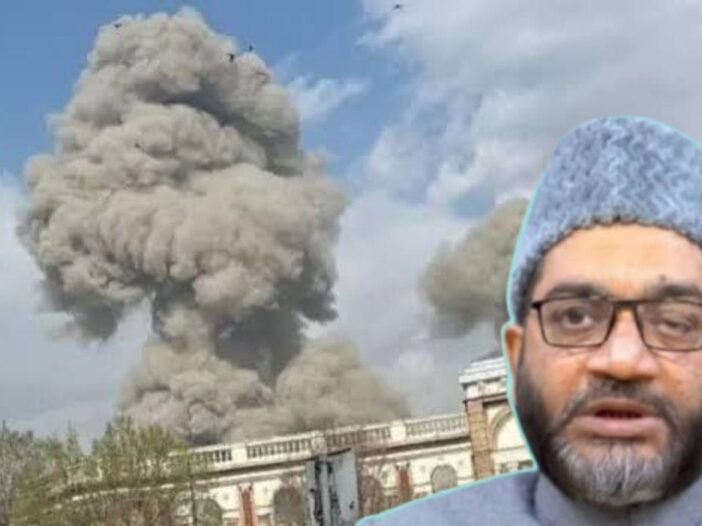
Jamaat-e-Islami Hind President Syed Saadatullah Hussaini has expressed deep concern over America’s new military attacks against Iran. He has described it as a major obstacle to the delicate diplomatic process and a dangerous development that poses a threat to peace and stability in West Asia. He said that the ceasefire agreement and commencement of negotiations had given a new hope to the people around the world that the region is moving away from conflict towards a peaceful solution.
The recent military action has dashed those hopes, undermining trust in diplomacy and increasing the risk of major conflict in the region. He urged all parties to exercise maximum restraint and called on the Government of India to play a more active role in promoting dialogue, preventing further escalation of tensions, and contributing to a just, comprehensive and lasting peace.
In a statement issued to the media, the Jamaat president said that America’s new military attacks against Iran have dealt a serious blow to the diplomatic process, which had raised hopes of reducing tensions in West Asia. He observed that the US attacks immediately after the ceasefire was announced and negotiations began seemed to disregard the spirit of the ceasefire and undermine the prospects for a peaceful resolution.
Concerns deepen due to unilateral military action
He said resorting to unilateral military action at a time when diplomacy was making progress raised serious concerns about respect for international law and established rules for the peaceful resolution of disputes. Such steps are less likely to yield a lasting solution, rather they have deepened mistrust, hardened negotiations, and set the region on a path toward another long period of conflict and instability.
abide by international law
Syed Saadatullah Hussaini further said that repeated attempts to put pressure on Iran through military force, sanctions and economic pressure have failed to yield any lasting political solution. Instead, these efforts have increased instability in the region and increased the risk of major conflict. He stressed that the international community must abide by international law without any doubt and discourage the unilateral use of force.
Armistice agreements and diplomatic promises should be respected
He said all parties should ensure respect for ceasefire agreements and diplomatic commitments, and actively support meaningful dialogue based on mutual respect and taking into account the legitimate security concerns of all parties concerned. He said that lasting peace in West Asia can be achieved not through military operations or coercive politics, but through dialogue, confidence-building measures, justice and adherence to international law.
Inflation will increase due to closure of Hormuz
The Jamaat president said that the consequences of the renewed hostilities go far beyond Iran and America. Strait of Hormuz, through which a large part of the world’s energy supply passes. Any disruption in it will have an immediate impact on global oil prices, inflation, shipping costs and international trade. Developing countries like India are particularly at risk because they are dependent on imported energy and this impacts fuel prices, food inflation, industrial production and economic growth.
India should play the role of peace ambassador
He said that escalating tensions also pose a serious risk of a large-scale humanitarian crisis, displacement of civilians and further destabilization of an already unstable region. For this reason, peace and stability in West Asia are not just regional concerns, but also matters of global economic importance. He urged the Government of India to play a more active and constructive diplomatic role in supporting dialogue, encouraging all parties to exercise restraint, preventing further escalation of tensions, and achieving a just, comprehensive and lasting peace.

Leave a Reply