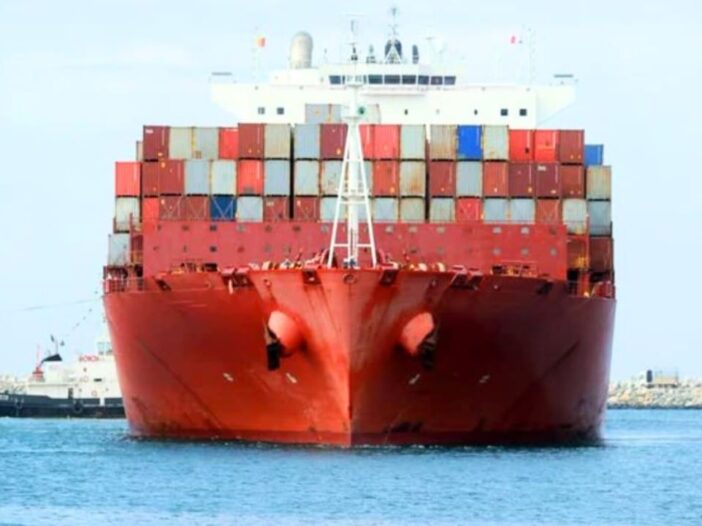
India’s refineries are helping Russia’s oil exporters and a large quantity of crude oil is being transported to the South Asian country. According to Bloomberg data, more than 23 lakh barrels of Moscow oil were unloaded daily at Indian ports last month and the supply has remained close to this level so far in July. This figure was almost zero before Russia’s attack on Ukraine and is helping to reduce the cargo of Russian oil accumulating in the sea.
The exports of many big Russian producers are still under US sanctions, but this does not seem to deter buyers. When these restrictions were implemented late last year, it was expected that there would be a huge decline in supply. But there has been a tremendous increase in shipments due to the use of middlemen. The huge supply comes at a time when supplies from the Persian Gulf have declined, boosted by rising Russian exports and falling prices.
Exports from the Middle East, the world’s most important production region, have declined again, despite some signs of improvement after the interim peace agreement between the US and Iran. But the deal collapsed within a month, leading to Iran resuming attacks on ships passing through the Strait of Hormuz and the US reimposing a naval blockade. Recently, threats by Houthi rebels in Yemen to attack ships calling at Saudi ports have jeopardized shipments from Saudi Arabia’s Red Sea ports, which have become an important alternative to supplies from the Gulf.
Production declined, but shipments increased
The four-week average of seaborne crude oil shipments from Russia remained near the highest level seen in the first week of this month, even though it declined slightly to 4.16 million barrels a day for the second straight week in the period through July 19, according to Bloomberg tanker-movement data. Due to Ukraine’s continued attacks on Russian refineries, some of the crude oil supply that cannot be processed in the country is probably being diverted to export, causing Russia’s foreign shipments to increase despite the decline in oil production.
Last week, Kiev drones attacked the 3 lakh barrel per day Yanos refinery located in Yaroslavl, north-east of Moscow. Due to the attacks so far in July, oil refining work in Russia has fallen to its lowest level in more than 21 years. Due to this, the shortage of fuel in the country has increased further and Moscow has had to approve subsidy on imported fuel to maintain continuous supply of fuel in the domestic market.
fear of US tariffs
Falling prices of Russian crude oil may also have attracted Indian buyers. Its price has fallen every week over the past 13 weeks (based on a four-week average) and is now priced at just over half of its peak in mid-April. At the beginning of the year, some Indian refiners had avoided buying crude oil from Moscow due to fear of US sanctions.
This hesitation may return again, as a bipartisan group of US senators is expected to soon introduce a bill imposing sanctions on Russia in the House. This bill will target the top five buyers of Russian crude oil and natural gas (which includes India) and impose tariff rates up to 100 percent on them. However, it remains to be seen whether President Donald Trump will impose these tariffs while trade talks are ongoing between the US and India.
Crude Oil Shipment
- Vessel-tracking data and port-agent reports show that in the week to July 19, about 27.73 million barrels of Russian crude were loaded onto 37 tankers. This volume compares to 27.51 million barrels (slightly revised figure) loaded on 36 ships last week.
- On a daily average basis, shipments increased to 3.96 million barrels per day for the week to July 19, from 3.93 million barrels (revised figure) the previous week.
- Flows since the beginning of the year have been 3.62 million barrels per day, which is 280,000 barrels per day more than the average for the whole of last year. Additionally, it is higher than the annual average since Moscow invaded Ukraine in February 2022.
- Weekly shipments may fluctuate as they are affected by weather, maintenance work, restrictions and departure times. This week, one shipment of Kebco grade in Kazakhstan was sent from Ust-Luga in the Baltic Sea and two from Novorossiysk in the Black Sea.
- The amount of Russian crude at sea rose to about 137 million barrels as of Sunday, driven by increased Russian exports and cargoes that are taking longer than ever to clear.
- Tracking data shows that there are five tankers loaded with Urals crude oil parked near Mersa al-Hamra on the Mediterranean coast of Egypt. Five other tankers are docked in the Riau Islands, east of Singapore. This place is the gathering place for the ships of the ‘Shadow Fleet’ (secret fleet) carrying contraband oil.
- Meanwhile, cargoes of Sokol and Sakhalin Blend crude oil from Russia’s Far East may have to wait for weeks to be moved from shuttle tankers to larger ocean vessels. Some cargoes of the prime ESPO grade have also been standing for weeks after loading near the main Pacific port of Cozmino.
export value
- Based on a four-week average, the total value of Moscow’s exports fell to $1.54 billion per week in the 28 days to July 19. This is $40 million less per week than the revised figures for the period till July 12.
- Russian crude oil prices also declined slightly, along with a slight decline in crude flows. Based on a four-week average, the price of the benchmark ‘Urals grade’ is now less than half of its recent peak in mid-April. Despite this, the value of Moscow’s exports is still higher than at any time last year.
- On this basis, export prices of Russia’s ‘Urals’ loaded in the Baltic fell by about $0.50 to $48.27 per barrel, while Black Sea prices fell by $0.60 to $47.78 per barrel.
- In contrast, the price of Pacific ESPO crude oil increased by $0.20 and averaged $63.69 per barrel. Delivery prices in India fell for the 13th consecutive week and fell by $1.60 to $65.28 a barrel, the lowest level since mid-March.
- All prices are based on daily data from Argus Media. The price calculations for all grades have been revised to the four-week average up to July 12.
- On a weekly basis, the value of exports moved in the opposite direction. It rose by nearly $200 million to $1.62 billion in the seven days to July 19, as rising prices offset the modest increase in flows.
Supply as per destination
Russia’s shipments to Asian customers (including those with no final destination specified) declined slightly to 3.89 million barrels per day in the 28 days through July 19, compared with a revised upward of 3.95 million barrels per day in the period through July 12. While the volume of Russian crude oil on tankers carrying India’s destination has fallen sharply in recent weeks, the volumes of ships that have not yet shown their final destination have.
The amount of oil on them has increased significantly, due to which this pattern is likely to reverse with time. Tankers often display intermediate destinations such as Suez or Port Sudan until crossing the Arabian Sea, while some ships never display a final destination even after stopping for unloading.
Supplies on tankers bound for Chinese ports stood at 1.06 million barrels per day in the four weeks to July 19, down from a revised 1.1 million barrels per day in the period to July 12. There were about 840,000 barrels of oil per day on tankers bound for India, down from 1.43 million barrels per day in the previous period.
But there is oil equivalent to 1.99 million barrels per day on ships that have not yet shown their final destination. Of this, about 1.67 million barrels of oil per day is on ships coming from Russia’s western ports whose destination is shown as Singapore, Port Said or the Suez Canal, or on ships coming from Pacific ports with no clear delivery point.
Apart from this, 320,000 barrels per day of oil are on tankers which have not yet indicated any destination. In the four weeks to July 12, supplies to Turkey remained steady at about 160,000 barrels per day, the highest in nearly three months.
Four-week supplies for Syria averaged about 30,000 barrels per day, down from a revised estimate of 60,000 barrels per day for the period through July 12. But this figure may change once the destination of the ships becomes clear. Tankers carrying Russian crude to Syria rarely indicate their destination.
Usually, when they are south of Crete, they disappear from automated tracking systems. This makes it difficult to predict the flow of oil before ships reach the port of Baniyas, where they can often be seen in satellite images.

Leave a Reply