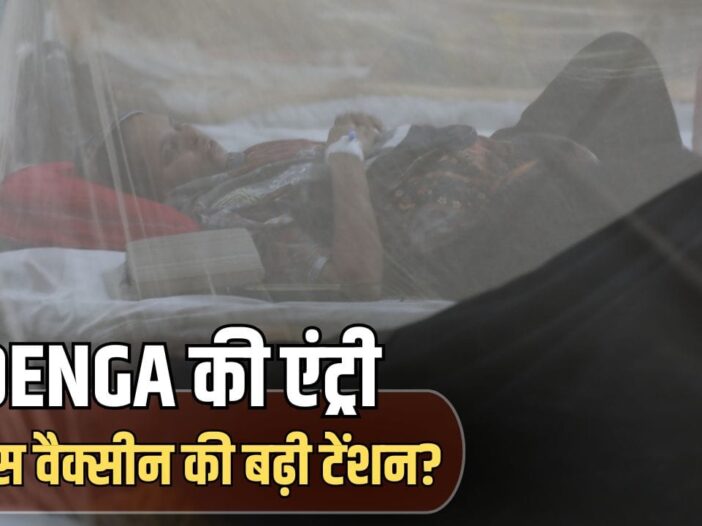
The risk of dengue also increases with every monsoon. Every year lakhs of people fall prey to this disease and thousands of patients have to be admitted to hospital. In such a situation, India has got a big relief against dengue for the first time. The country’s drug regulator DCGI has approved the dengue vaccine QDENGA of Japanese pharmaceutical company Takeda. It is India’s first approved dengue vaccine, developed to protect against all four types of dengue virus – DENV-1, DENV-2, DENV-3 and DENV-4.
The biggest feature of this vaccine is that before getting it, there will be no need to get tested whether the person has ever had dengue before or not. It has been approved for people between 4 to 60 years of age. However, experts clearly say that even after the introduction of the vaccine, precautions like protection from mosquitoes, not allowing water to accumulate around the house and timely treatment will remain as important as before.
What is QDENGA and how does it work?
QDENGA is a live attenuated tetravalent vaccine. In simple language, a weakened form of dengue virus has been used in it, due to which the body’s immune system learns to recognize and fight all four types of dengue viruses. This is why it claims to provide protection against not just one, but all the major serotypes of dengue.
How will this vaccine be administered and how effective is it?
QDENGA will be given in two doses, a gap of three months will be kept between the first and second doses. According to the company’s clinical trials, the vaccine was about 80% effective against confirmed cases of dengue one year after the second dose, while reducing the risk of hospitalization by more than 90%.
Which vaccine was there before QDENGA?
Before QDENGA, the most famous dengue vaccine in the world was Dengvaxia, which was made by the French company Sanofi Pasteur. But, its biggest drawback was that it was advised to be used only for those people who had previously suffered from dengue. Its use was limited in many countries due to the fear of increasing the risk of severe dengue in people who had not previously been infected.
The biggest impact of QDENGA’s arrival may be on Sanofi’s Dengvaxia. Because QDENGA can be given without first testing for dengue infection, whereas this condition was associated with Dengvaxia. This is the reason why Dengvaxia has been discontinued in countries like Brazil due to low demand.
Why is QDENGA considered a gamechanger?
The biggest strength of QDENGA is that it is not necessary to know the history of dengue infection before getting it. For this reason, it has also received the recommendation of WHO and till now it has been approved in more than 40 countries. Its use has started in Indonesia, Brazil, Argentina, Thailand, Britain and many countries of the European Union.
What will be the cost and who will be affected?
The official price of QDENGA in India has not been decided yet. However, it is estimated that one dose could cost between Rs 3,000 to Rs 6,000. It takes two doses, so the entire course can cost Rs 6,000 to Rs 12,000.

Leave a Reply