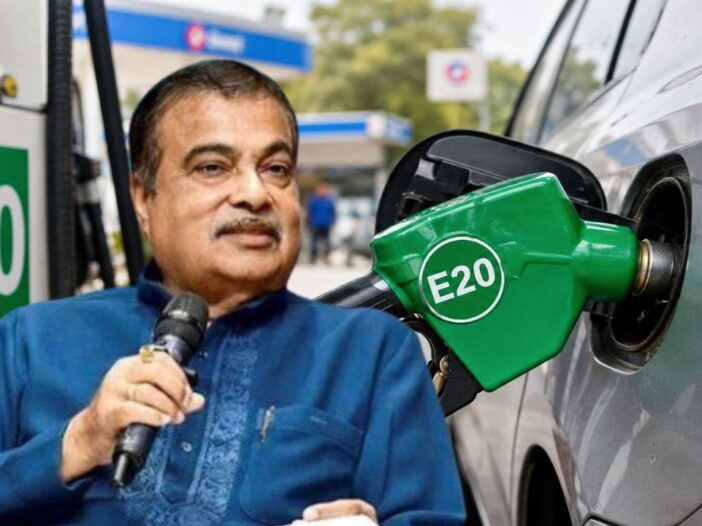
The Central Government responded to the controversy related to E20 fuel in the Rajya Sabha on Wednesday. The Ministry of Road Transport and Highways clarified the situation regarding the effect of E20 fuel (petrol mixed with 20% ethanol) on vehicles. MP A.A. Responding to a question from Rahim, Road Transport and Highways Minister Nitin Jairam Gadkari said there have been no widespread reports of major malfunctions or engine failures in vehicles due to the use of E20 fuel.
According to the government, the impact of E20 on two-wheeler and four-wheeler vehicles has been thoroughly investigated by Indian Oil Corporation Limited (IOCL), Indian Institute of Petroleum (IIP) Dehradun, Automotive Research Association of India (ARAI) and SIAM. During testing, no significant reduction was found in the performance of BS-VI standard vehicles or older vehicles.
Some deficiencies seen in BS-III vehicles
The government said that certain BS-III vehicles manufactured between April 1, 2005 and 2016 may require replacement of rubber components (such as rubber parts and gaskets), which can be easily done during routine servicing.
cleaning when mileage is low
The ministry said that the concerns about low mileage of vehicles depend not only on the type of fuel, but also on factors like driving habits, regular maintenance (changing oil, cleaning air filter), tire pressure and use of AC.
Target to reach 20% ethanol blending
Ethanol blending is being implemented in a phased manner based on the recommendations of the Inter-Ministerial Committee constituted under NITI Aayog and the Roadmap 2020-25 report for Ethanol Blending in India released in June 2021. Ethanol blending in India was 1.53% in 2013-14, which has increased to 19.2% in 2024-25, and it is targeted to reach 20% by December 2025.
Full attention to fuel quality and vehicle safety
At the same time, the government says that the concerns being raised on social media are baseless and full attention has been paid to the quality of fuel and safety of the vehicle.

Leave a Reply