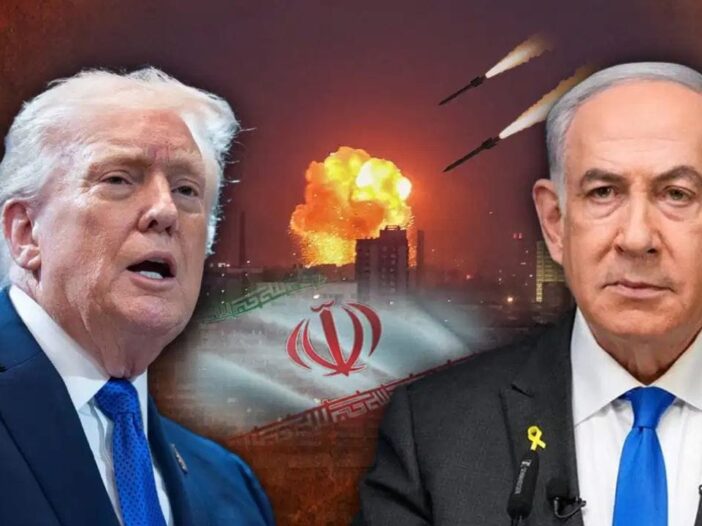
Statements are coming from America and Iran, diplomatic contacts are increasing and it is hoped that both the countries can choose the path of dialogue instead of confrontation, but the question is whether the situation on the ground is also telling the same story? Because if we look at recent events, the picture appears completely different.
Hormuz There are reports of warning shots around. Drone activities from Iran remain in the news. The US military presence in the Persian Gulf remains constant and the incidents around the Qeshm-Sirik coast indicate that the region is still not completely pacified, that is, the negotiating table is set, but security and military preparations are also ongoing.
This is the biggest contradiction of this entire incident. If both sides had complete trust in each other, would there have been so much military alertness? Because the real test of any agreement is not the signing of the document, but trust and at present the situation shows that the gap of distrust between America and Iran is not yet completely filled.
Beginning of troubles for Netanyahu
- If a deal is reached between America and Iran, will it be the beginning of political troubles for Benjamin Netanyahu?
- The first question that will arise is that if there had to be a compromise in the end, then what was the need for such a big war?
- Second, if Iran, which was described as the biggest threat, remains in power and order, then the people of Israel may ask what was achieved after paying such a huge price?
- Third, the opposition will get a new opportunity to attack Netanyahu. The question would be whether they were out to stop Iran or just gave rise to another conflict?
- Fourth, Netanyahu’s own allies may also be angry. A section of the fundamentalist camp seems to be in no mood to accept any soft compromise.
- And fifthly, the biggest question may arise on Netanyahu’s political credibility. If Washington takes the credit for the deal and Tel Aviv remains a mere spectator, then opponents can create the narrative that Trump took the decision and Netanyahu just had to accept it.
Big test for Netanyahu’s political future
This is why the possible US-Iran deal is being seen not only as a diplomatic agreement but also as a major test of Netanyahu’s political future.
America is saying that Iran should take a decision soon. Iran alleges that Israel is looking for opportunities to derail the agreement and Israel has made it clear that if necessary, it can choose the path of military action alone.
This is where the biggest difficulties of this possible deal begin. On one hand, America wants that the agreement should not remain just on paper, but Iran should take concrete steps on its nuclear program. On the other hand, Iran first wants relief from sanctions and maritime pressure. Israel argues that any economic benefit to Iran could become a threat to its security in the future.
Matter stuck on uranium, missiles and drones
The matter has not stopped here. America wants immediate control over the stock of enriched uranium. Iran says its stocks will remain within the country and Israel says its security concerns will not go away even after any agreement. If uranium remains in Iran.
The biggest conflict is on missile and drone programs. America wants sanctions and surveillance. Iran considers this an issue related to its sovereignty and security, whereas Israel wants more stringent restrictions to be imposed on Iran’s missile capability, that is, the picture is clear. All three parties are at the negotiating table, but their red lines are different.
Bureau Report, TV9 Bharatvarsha
Read this also- Which countries were taking advantage of the closure of the Strait of Hormuz, which countries converted the disaster into an opportunity?

Leave a Reply