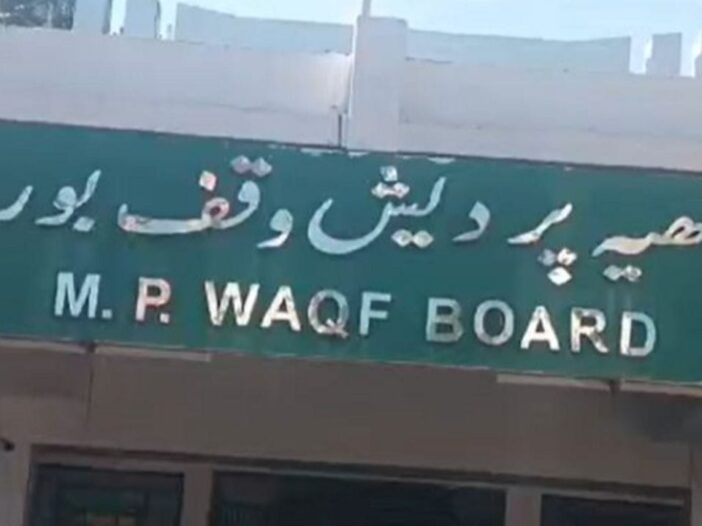
Madhya Pradesh has become the first state in the country to reconstitute the Waqf Board under the new Waqf Act-2025. On the instructions of Chief Minister Dr. Mohan Yadav, the state government has issued the notification of the formation of Madhya Pradesh Waqf Board in the Gazette. Sanwar Patel has been made the chairman of the newly formed board.
Apart from this, for the first time two Hindu members have been included in the MP Waqf Board. The government has constituted this board under the provisions of Sections 13 and 14 of the Waqf Act, 1995 (amended in 2025). For the first time, the names of two Hindu members Manoj Malpani and Animesh Bhargava are included in the 10-member Waqf Board. The government says that the board has been reconstituted by taking immediate action in accordance with the provisions of the new Waqf Act.
10 member board members
The members appointed in the new Waqf Board include Najma Heptulla (New Delhi), MLA Atif Aqeel (Bhopal North), Faizan Khan (Ujjain), Fatema Choudhary (Indore), Shaista Sultan (Councillor, Berasia), Shabana Khan (Councillor, Ratlam), Manoj Malpani (Indore), Animesh Bhargava (Raghogarh, Guna) and Commissioner of Backward Classes and Minority Welfare Department.
Najma Heptulla’s tenure continues
The state government has clarified that the tenure of Najma Heptulla is effective till 18 April 2028 under the notification dated 19 April 2023. Therefore, he has been included as a member in the new board for the remaining term. According to the government, this reorganization has been done under the provisions of Section 13 and Section 14 of the Waqf Act-1995 (Amended-2025). Madhya Pradesh has become the first state to reconstitute the Waqf Board after the implementation of the new law.
What does Waqf Board do?
Madhya Pradesh Waqf Board is a legal institution formed under the Act, 1995. It has its headquarters in Bhopal and its job is to manage and protect the Waqf properties, as well as ensure proper utilization of the income from them. Its responsibilities include maintaining records of all registered properties in the state, protecting Waqf properties from encroachment, taking legal action in case of disputes and ensuring that the income from these properties is used for religious, educational and social welfare purposes.

Leave a Reply