According to a study based on the National Family Health Survey-5 of India, almost one out of every two pregnancies in the country falls in the high-risk category. Lack of education, poverty, short spacing between pregnancies, prenatal complications and previous cesarean operations pose risks to both mother and baby. Researchers say that women from socially and economically weaker sections face the highest risk, highlighting the need to further strengthen maternal health services and awareness programs.
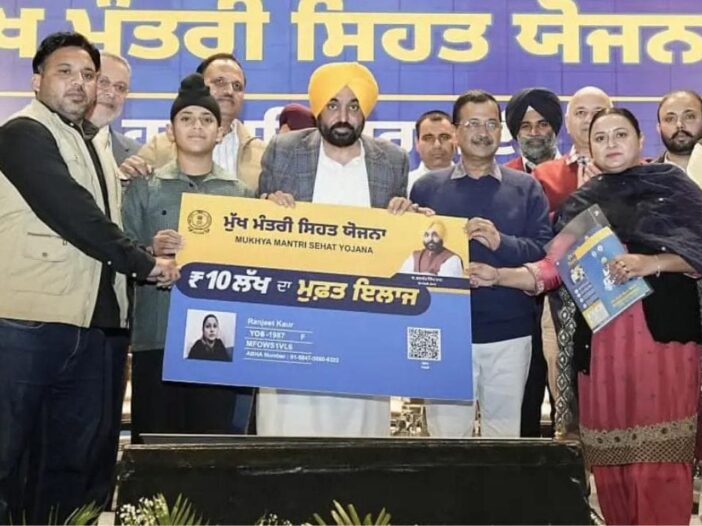
health card It has emerged as an important resource for women who require surgical intervention during labor due to prolonged labor pain, health problems, unhealthy condition of the fetus or problems due to prior cesarean delivery.
Treatment provided in 7300 cases
According to official data received from the state health agency, till May 25, 2026, a total of 7300 cases of maternal and newborn care were provided treatment under the scheme, on which approximately ₹ 7.04 crore was spent. These included 5,300 high-risk cesarean delivery cases, on which ₹6.37 crore was spent. These figures reflect the scheme’s growing role in high-risk pregnancy and emergency obstetric services in Punjab.
Which women got the benefit of the scheme?
Deepika, a 28-year-old beneficiary from Patiala, who faced many complications including anemia during pregnancy, shares her personal experience and says that her cesarean operation was completely cashless under the Sehat Card. Her husband Manoj said that the entire treatment was completed smoothly without any financial burden, which is a matter of relief for him.
Similarly, 31-year-old Deeksha Sonkar received timely maternity and neonatal care during the birth of her third child at the ‘Punjab Institute of Medical Sciences’ hospital, where the entire treatment was cashless under the scheme. Her husband Vikas Sonkar said, we already have two daughters and we were worried that there should be no complication in the third delivery.
Along with maternity services, the scheme is also providing specialized medical care for seriously ill and premature newborns. According to official data from the state health agency, Punjab, a total of 2,094 newborns were treated in various packages under the scheme. Under Basic Neonatal Care, which provides support to infants who are treated along with their mothers, 881 newborns were treated at an expense of ₹5.82 lakh.
₹28.27 lakh spent
Similarly, 777 newborns requiring short-term Intensive Care Unit treatment were benefited under the Special Neonatal Care Package, on which ₹ 28.27 lakh was spent. Under the Intensive Neonatal Care Package, 207 newborns were provided assistance for treatment of serious conditions like Continuous Positive Airway Pressure (CPAP) support, ventilation for less than 24 hours and neonatal infections, on which ₹ 15.65 lakh was spent.
According to official data, 116 highly vulnerable newborns weighing 1,200 to 1,499 grams or requiring long-term ventilator support were provided advanced neonatal care at a cost of ₹9.30 lakh. ‘Mukhyamantri Sehat Yojana’ is emerging as a big health security cover for families across the state. Till now, about 44.8 lakh registrations have been done under this scheme.
Critical neonatal care to 64 newborns
Apart from this, critical neonatal care was provided to 64 newborns suffering from premature birth, multi-organ complications and severe medical instability, on which ₹ 7.88 lakh was spent. Apart from this, long term chronic neonatal care assistance was also provided to 18 newborns. Apart from this, 17 infants were included under long term neonatal care, who required long-term treatment for serious conditions like bronchopulmonary dysplasia and necrotizing enterocolitis, which cost ₹56 thousand.

Leave a Reply