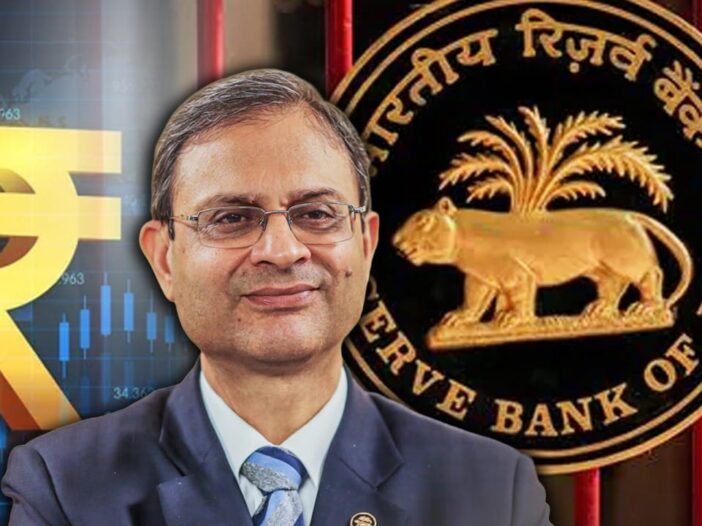
The Reserve Bank of India on Friday kept the repo rate at 5.25 percent without any change and has kept its monetary policy stance neutral. This time the entire focus of RBI is to bring maximum foreign investment in India. For this, capital gains tax has been abolished for FIIs. Apart from this, the central bank has taken 7 major decisions in the policy meeting. These include access by foreign investors to government securities, investment limits for foreign portfolio investors, equity investment rules for NRIs, external commercial borrowings by public sector companies, FCNR(B) deposits and export earnings. Let us tell you about them in detail.
1. Capital gains tax abolished
To attract foreign capital and support the rupee, India has abolished long-term capital gains tax on FII investments in government securities from April 1, 2026. Currently, foreign investors have to pay 12.5 percent long-term capital gains tax on listed shares and bonds held for more than 12 months.
2. FAR increased for long-term G-Secs
RBI expanded the scope of the Fully Accessible Route (FAR) to include all new 15-year, 30-year and 40-year government security issues. This means that foreign investors will get more access to long-term Indian government bonds. The objective of this move is to increase foreign participation in India’s sovereign debt market and strengthen the investor base for long-term securities.
3. FPI concentration limit removed under general route
The Central Bank removed the concentration limit on investment for Foreign Portfolio Investors (FPIs) under the general route. This will provide greater freedom to FPIs to invest in the Indian debt market without the constraints of any additional limits. This change is expected to reduce operational hassles for foreign investors and make it easier to access Indian fixed-income assets.
4. Higher equity investment limit for NRIs and OCIs
RBI has announced higher investment limits for Non-Resident Indians (NRIs) and Overseas Citizens of India (OCI) in listed equities without SEBI registration. This move expands the scope of investors beyond the traditional FPI channel and provides more opportunities for Indians living abroad to invest in Indian stocks. With this decision, foreign investors are expected to invest more and more money in India.
5. Forex swap window extended for PSU ECBs
The concessional forex swap window for external commercial borrowing (ECB) taken by public sector companies has been extended till September 30, 2026. The objective of this facility is to help PSUs to manage loans taken in foreign currency in a better way. With the increase in the window, public sector companies will get more time to take advantage of foreign loan options.
6. Hedging cost support increased for FCNR(B) deposits
At the same time, RBI has extended the entire hedging cost support till September 30, 2026 for banks to raise FCNR (B) deposits with a tenure of 3 to 5 years. FCNR(B) deposits are foreign currency deposits that banks raise from NRI customers. By getting hedging cost support, it will be easier for banks to raise such deposits, which can increase the inflow of foreign currency into the banking system.
7. Period for bringing back export earnings made 9 months
RBI has reduced the time limit for bringing back export earnings to India from 15 months to 9 months. This means that exporters will now have to bring their export earnings to the country within nine months. This step may improve the timing of foreign exchange inflow, although it will not provide exporters with as much flexibility as before.
Also read- RBI Monetary Policy: Your EMI will be reduced or you will get a shock! Decision will be taken today

Leave a Reply