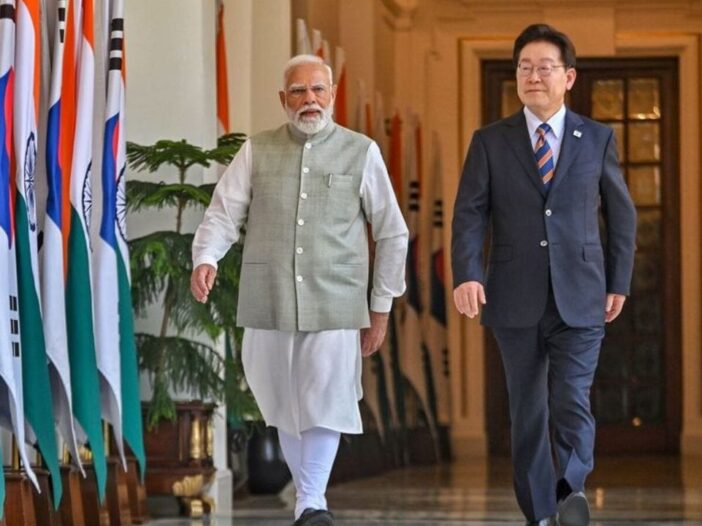
India and South Korea on Monday started the next round of talks to upgrade the ‘Comprehensive Economic Partnership Agreement’ (CEPA). This agreement came into force in January 2010. This three-day long conversation (25-27 May) is very important. India has expressed serious concerns about the increasing trade deficit between the two countries. The government official said that this is the 12th round of India-Korea CEPA upgrade talks. On April 20, Commerce and Industry Minister Piyush Goyal had proposed to his Korean counterpart Yeo Han-ku to negotiate a new bilateral free trade deal. Its purpose is to make the agreement more contemporary and address concerns related to trade deficit (the difference between imports and exports).
How is the bilateral trade between the two countries?
India’s exports to Korea increased from $5.81 billion in 2024-25 to $6 billion in 2025-26 with a growth of 3.31 percent. Export growth during 2022-25 was negative. Imports increased from $21 billion in 2024-25 to $21.35 billion in 2025-26 with a growth of 1.38 percent. Trade deficit is projected to be $15.35 billion in 2025-26, $15.2 billion in 2024-25, $14.71 billion in 2023-24, $14.57 billion in 2022-23 and $9.4 billion in 2021-22. Goyal said the original CEPA has not worked in India’s favor, and the trade gap has widened due to the illogical manner in which the agreement was finalized in 2010.
plan to double trade
According to experts, Indian exporters face some ‘non-tariff barriers’ in South Korea. These include stringent standards, regulations and certification requirements, making it difficult for Indian goods to enter the South Korean market. Both countries aim to increase their mutual trade from the current $27 billion to $54 billion by 2030, and also ensure a more balanced trade relationship.
What is CEPA?
Under CEPA, two or more countries either significantly reduce or completely eliminate customs duties on most of the goods traded between them. In addition, they also ease regulations to promote services trade and increase investment. Typically, the process of reviewing or updating a trade agreement includes issues related to its implementation, rules of origin for goods, procedures for inspection and release of goods, customs procedures, further liberalization of trade in goods, and sharing and exchange of trade data.

Leave a Reply