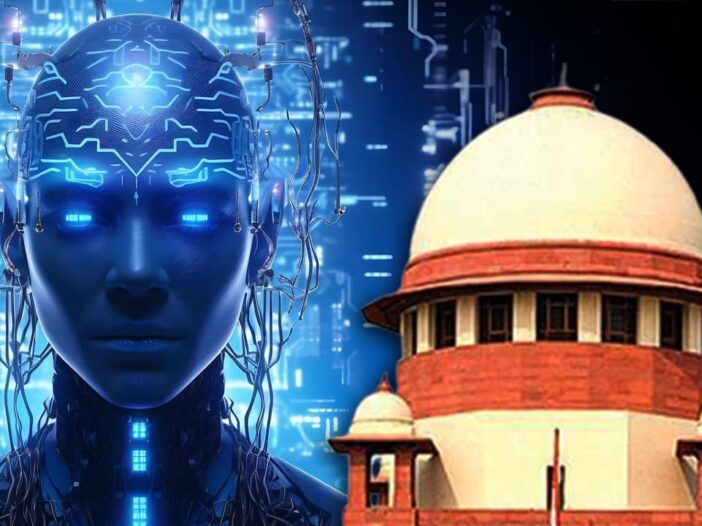
There has been a move towards formal use of AI in courts. Rules will be prepared regarding how AI will be used in the court. A blueprint has been prepared for what safety measures and precautions will be taken. The Supreme Court has released the draft of Regulations for Use of AI in Court 2026 and has invited suggestions from all stakeholders and the general public. In the released draft, the objective of regulation of use of AI in courts is based on the principles of human primacy, accountability, data security and judicial independence in the judicial process.
In the draft regulations issued for the use of AI in the court, it has been said that the use of Artificial Intelligence will be subject to human judgment and judicial authority at all times. Each AI system will work only in an auxiliary capacity and will not replace any duly appointed judicial officer i.e. judge. Only judges will have the final authority to determine matters related to law, facts and justice. No AI system will work in giving decisions and sentencing in any case without human intervention.
Supreme Court judge Justice P.S. This committee, headed by Narasimha, includes Justice Sanjeev Sachdeva, Raja Vijayaraghavan V., Anup Chitkara and Suraj Govindraj as members. The committee has sought opinions and suggestions from all concerned parties and the general public before finalizing its recommendations. These suggestions will have to be submitted by June 20.
What is said in the draft?
According to the draft, AI systems used in court processes should be designed, trained and implemented in such a way that they promote fairness and avoid discrimination. It further states that no AI system shall be implemented which promotes, abets or causes discrimination on the basis of race, religion, caste, sex, disability, language, economic status or any other ground prohibited under the Constitution or any existing law. Also, special care will be taken to protect the rights and interests of vulnerable groups such as women, children, people with disabilities, marginalized and minority communities, economically and socially backward classes.

Leave a Reply