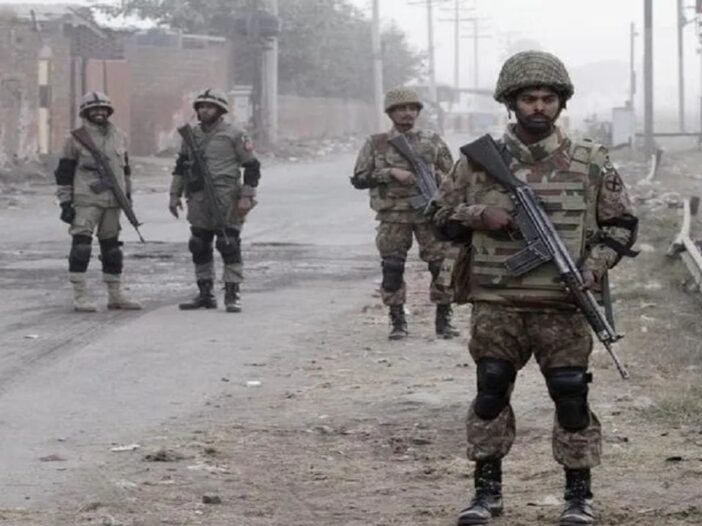
The operational command and control of the Pakistani Army from the western part of the Indus River to Skardu has become very weak. The influence of the army in Balochistan and Khyber Pakhtunkhwa is now mainly limited to garrison (military cantonment) areas only. Due to which, due to the crisis of confidence in Balochistan and Khyber Pakhtunkhwa, the command of 11th and 12th Corps of Pakistan Army is not able to work effectively.
The protests that have been going on for the last 41 days in Pakistan Occupied Kashmir (PoJK) have affected the China-Pakistan Economic Corridor (CPEC) and the northern supply lines of the Pakistan Army. According to sources, the routes to Skardu are affected and trucks loaded with Chinese goods are stranded in Gilgit-Baltistan. Pakistan Army is also suffering losses at the strategic level. Also, the Pakistani Army, under the leadership of Army Chief General Asim Munir, is facing the biggest command crisis since the 1971 war.
Difficulties in providing resources also increased
There are problems in delivering supplies to Force Command Northern Areas (FCNA) and the 34th Light Infantry Division, due to which dependence on air supply has increased in many areas. The operational command of the Pakistan Army in Balochistan and Khyber Pakhtunkhwa has weakened and the army’s influence is now mainly limited to military cantonments from the western side of the Indus River to Skardu.
According to the report, since January 1, 2024, there have been 1,730 attacks on Pakistani security forces in Balochistan and Khyber Pakhtunkhwa. In these, 19 major attacks have been specifically mentioned. It is claimed that in these attacks, 13 times the Frontier Corps (FC) and the police suffered the maximum losses, while 6 times the army convoys carrying ration and ammunition were targeted. The report alleges that in many cases the Pakistani Army did not send additional troops to help the trapped security forces.
According to sources, after the major attacks on Jafar Express, Pakistan Army has reduced sending additional forces to the risk areas to a great extent. The reason behind this could be the decline in morale of the soldiers and limited resources. The logistics system of Peshawar-based 11th Corps and Quetta-based 12th Corps has become largely dependent on air supply.
Why was the soldiers’ ration cut?
Pakistan’s defense budget in the financial year 2026-27 is $10.8 billion, of which about $3 billion will be spent on pensions. Due to this, the ration of soldiers has been cut and the quality of food has also been affected in some areas. The report also said that Pakistan does not have strategic oil reserves and limited quantity of crude oil is available in its refineries.
Pakistan Army’s anti-terrorism operations are weakening. Operations like Operation Zarb-e-Azb, Operation Azm-e-Istehkaam and Operation Shaban did not have a decisive impact on terrorism, but rather reduced the support of the local population and affected the morale and combat capability of the army.

Leave a Reply