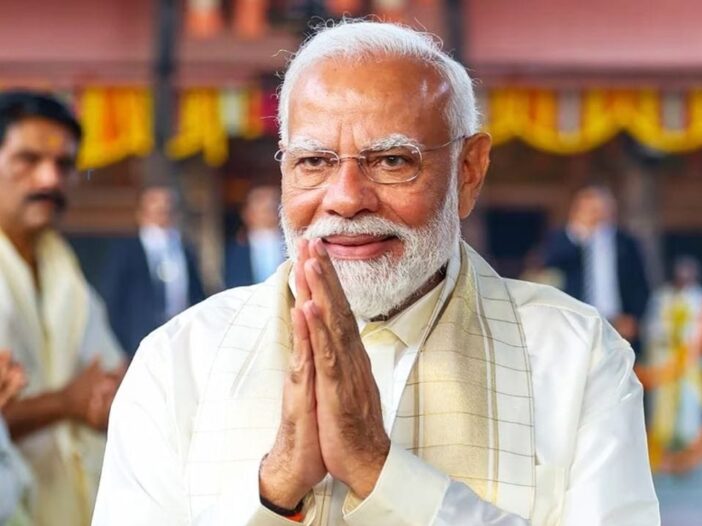
Prime Minister Narendra Modi on Monday, on the completion of 12 years of ‘Pradhan Mantri Garib Kalyan Yojana’ (PMGKY), emphasized on the benefits of many schemes of his government and their benefits reaching the general public. In a post on social media ‘X’, PM Modi mentioned the main achievements of Antyodaya Yojana, Swachh Bharat Mission, PM Awas Yojana, Jal Jeevan Mission, Ayushman Bharat and other initiatives and said that the main objective of starting all these schemes was to provide respect and opportunities to the people.
PM Modi said, “India has seen many big changes in the last 12 years and at the center of these changes has been the welfare of the poor and the underprivileged. We have always been inspired by ‘Antyodaya’ and our endeavor has always been to ensure that the benefits of development reach those who were left behind for decades. From Jan Dhan accounts and Direct Benefit Transfer to Swachh Bharat, PM Awas Yojana, Jal Jeevan Mission, Ayushman Bharat and other schemes, every initiative is aimed at giving dignity to the people. Providing more opportunities.”
‘Leakage reduced through direct benefit transfer’
He also emphasized on the role of technology, which played an important role in the matter of direct benefit transfer under government schemes to the poor section of the society. He said that this has reduced leakages, improved efficiency and strengthened trust in the government.
PM Modi posted, saying, “It is also a matter of happiness that technology has played an important role in improving the quality of life of the poor. Through DBT and digital platforms, help is reaching the people in a direct and transparent manner. This has reduced leakages, increased efficiency and strengthened trust in governance. In this way, the journey to advance poor welfare has become a collective movement towards human empowerment and realizing our dream of ‘Developed India’.”
Rapid decline in poverty level: PIB
According to the Press Information Bureau (PIB), rural level poverty in the country was 26% in 2012 and it has reduced to less than 5% in the year 2024. In just over a decade, millions of rural families have risen out of poverty, marking one of the most significant social changes in recent years. Direct Benefit Transfer is a major government reform initiative to redesign the existing delivery processes. Its objective is to ensure better and timely delivery of benefits by using Information and Communication Technology (ICT).
Under this technique, money is transferred directly to the bank or postal accounts of eligible beneficiaries (especially Aadhaar linked accounts), and benefits in kind are also provided from the government to individual beneficiaries. Direct Benefit Transfer was introduced on January 1, 2013 to improve the government delivery system in welfare schemes, provide easy and fast flow of information or funds and reduce cases of fraud.

Leave a Reply