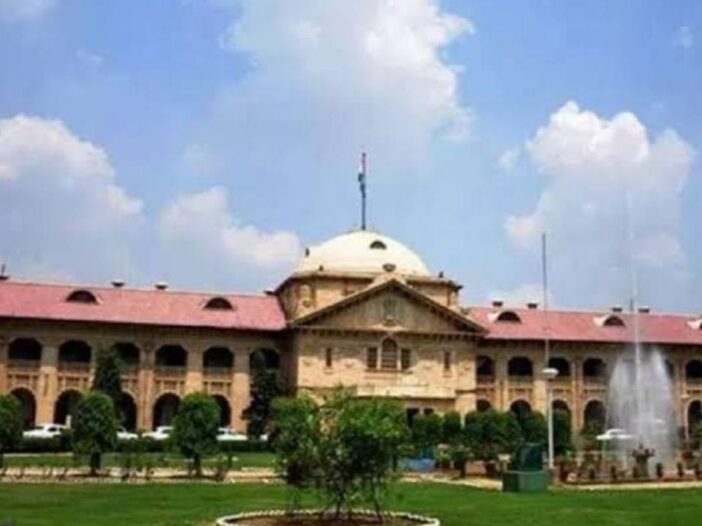
The case of Amroha FIR in which the Allahabad High Court has refused to quash is not just a tragedy of a family, but it is a question on the entire system in which a minor girl was repeatedly sexually exploited under the guise of religious rituals. Justice J.J. The comment made by the division bench of Justice Munir and Justice Tarun Saxena is clear – no crime can be avoided under the guise of personal law. This comment is certainly brief, but behind it lies a long legal and social debate, which is directly related to the Constitution and personal law.
First of all, let us understand the events as per the FIR lodged. The victim was married at the age of just 15 years. After marriage, she was beaten and given triple talaq within a few months. After this, when the husband expressed his desire to remarry, according to Islamic tradition, the victim was told to first marry another man and then get a divorce from him. This process is called Halala.
Allegation of forced physical relationship in the name of Halala
It is alleged that in the name of Halala, a Maulana forcibly had physical relations with the victim, while the girl was still a minor. Years later, when the divorce took place again, she was told that this time Halala would have to be performed twice, and on this pretext, in February 2025, two people allegedly had physical relations with her. This is the episode which the court saw as gang rape.
The court’s reasoning is legally very clear. The POCSO Act in India states that sexual intercourse (even if consensual) with anyone under the age of 18 years is a crime. This provision does not recognize any exception to any religious, social or family tradition. This principle was further strengthened by the Supreme Court in 2017 in the Independent Thought vs. Union of India case, in which it was said that sex with a minor wife even within marriage would be considered rape.

Krishnaji Shukla, Allahabad High Court Advocate Central Government
The incident is not outside the scope of criminal law
The same principle applies in this case too – even if Nikah and Halala are considered religiously valid, when the parties involved are minors, the incident cannot go beyond the scope of criminal law. That is why the court first declared Halala as a crime under POCSO and the subsequent Halala incident as gang rape. Although the court refrained from interfering with the right to religious tradition and free belief, it also underlined that in the name of any tradition, violation of the rights to equality and dignified life enshrined in Articles 14 and 21 of the Constitution will not be tolerated.
Debate among Muslim women regarding Halala practice
This matter also connects to the wider debate going on about Nikah Halala. It is not a new thing that a section of Muslim women and women’s rights organizations have repeatedly raised questions regarding the Halala practice. In 2017, when the Supreme Court had declared triple talaq i.e. Talaq-e-Biddat unconstitutional by a majority of 3:2 in the case of Shayra Bano vs Union of India, the issue of Halala and polygamy was also raised in the same petition, although the court then ruled only on triple talaq, calling it arbitrary and a violation of the fundamental right under Article 14. Since then, several petitions challenging the constitutional validity of polygamy and Halala in Muslim Personal Law are pending in the Supreme Court, on which it has also been agreed to reconstitute a Constitution Bench to hear them.
The petitioners argued that Section 2 of the Muslim Personal Law (Shariat) Application Act, 1937 makes women unsafe and vulnerable and violates Articles 14, 15 and 21 of the Constitution, while organizations like Jamiat-Ulama-e-Hind argued that the Constitution does not touch personal law. This case of Amroha brings this debate to a practical level. Shows that when the practice is abused by disregarding someone’s consent and age, it directly amounts to a crime, regardless of theoretical debate.
Violation of women’s rights in the name of personal law
The history of triple talaq and violation of women’s rights in the name of personal law should also be seen in this context, because Halala actually has its roots in the same arbitrary system of triple talaq which has made women unsafe time and again. In 1985, in the Shah Bano case, the Supreme Court had given the right to maintenance to a divorced Muslim woman, but the then government, under pressure from the community, limited the impact of that decision by passing the Muslim Women (Protection of Rights on Divorce) Act, 1986.
Three decades later, the Shayara Bano judgment in 2017 tried to correct this imbalance to some extent, and in 2019, the central government also made instant triple talaq a punishable offense by introducing the Muslim Women (Protection of Rights on Marriage) Act. Some effect of this has been seen, but it is ironical that the Muslim society has not yet understood its implications.
Why are men allowed to divorce immediately?
Both the practices of Triple Talaq and Halala are basically the product of the same fabric. A system in which the entire right to divorce was practically concentrated with the man and the role of the woman was limited to bearing that decision. When a man is given the freedom to give unilateral and instant talaq without any conciliation process, he can abuse the same freedom again and again, as happened in the case of Amroha, where the same person gave triple talaq twice. The series exposes a social structure in which a woman’s body and consent are subordinated to man’s will and religious interpretation.
Question of dignity and freedom of the minor
This decision is also important in that it again underlines the line between judiciary and religious autonomy. In a multi-religious and multicultural society like India, respect for personal law is part of the basic spirit of the Constitution, but this respect cannot be unlimited. Wherever the observance of any custom violates the dignity, liberty and physical integrity of a person, especially a minor, the Constitution and criminal law stand above the custom.
The same principle was applied in the Triple Talaq case and is now being applied in the case of misuse of Halala also. The only difference is that in the first case the practice itself was held unconstitutional, whereas in this case the court declared its misuse a crime without commenting on the legality of the practice.
(These are the personal views of the author.)

Leave a Reply