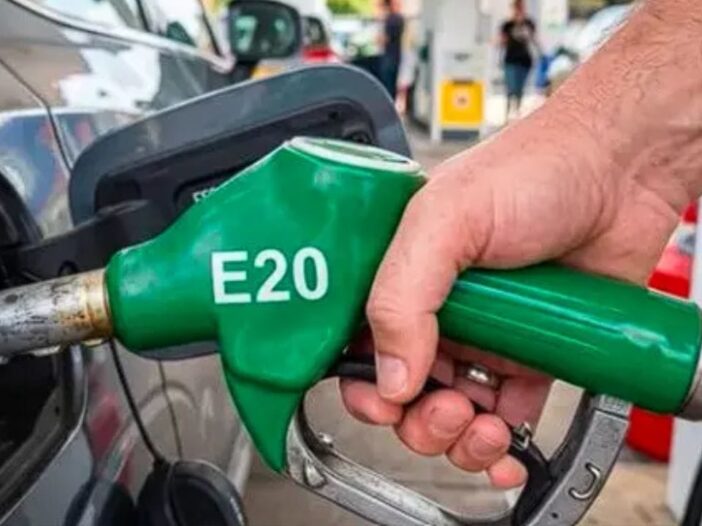
When raising questions on E-20 petrol, vehicle manufacturing companies are citing damage to new vehicles due to adulteration in the fuel. The issue is that if any adulteration is taking place in E-20 then where is it taking place? Consumers are not getting the answer to this, because oil companies do real-time monitoring of adulteration in petrol pumps through digital technology. Due to this, no separate annual report is issued on adulteration or fraud in petrol (such as kerosene or solvents).
On this matter, consumer affairs experts say that if the vehicle manufacturers and the government are giving green signal to E-20 and are claiming adulteration in ethanol mixed petrol, then there is no place left other than the petrol pump. Where adulteration can be done. After this, all that remains to be said is that consumers themselves are spoiling their vehicles by adulterating E-20.
What do experts say?
According to Satyam Singh, consumer affairs lawyer in the Supreme Court, till a few years ago, an annual report was issued on adulteration in petrol pumps, lack of services and other aspects. That has been closed and now real time monitoring, GPS tracking of oil tankers, online automation and surprise inspections are done by oil companies. In such a situation, the oil companies claim that there is no adulteration. Whereas on E-20, the vehicle manufacturer’s clarification has come out that the company will not be responsible if the fuel is adulterated. According to Singh, where will the consumer go in such a situation, because the government is clearly saying that E-20 does not make any difference to the engine or equipment of the vehicle. Whereas in the unpublished report of ARAI it is clear that if the vehicle is not E-20 compatible then some plastic and rubber parts will be affected.
Government should take immediate action
Professor Bejon Mishra said that at present the situation of consumers is very critical. The government should immediately take action on this, the reality should be brought out. If E-20 is being adulterated then it is a very serious issue. Oil companies should have clarified their stand on this only when the vehicle manufacturing company had claimed adulteration in E-20 petrol. He said that where should the consumer go? Should he go to the petrol pump every time and first check whether the fuel is adulterated? If consumers approach consumer forums or courts for every issue, then oil companies and vehicle manufacturing companies should close down consumer redressal authorities. According to Supreme Court lawyer Anupam Mishra, this is a very serious issue. The government should take immediate steps to remove every misconception and shortcomings wherever there are. Steps should be taken to remove it.
How are petrol pumps monitored?
- GPS Tracking: GPS has been installed in tankers carrying oil so that there is no theft or adulteration on the way.
- Automation: The tanks of petrol pumps have been linked to online automation, which provides immediate information about the quantity of oil and any discrepancy in the stock.
- Random Inspection: Random inspection is conducted by Quality Assurance Cell (QAC) and mobile labs by taking random samples from petrol pumps across the country.
- Fuel density- The density of fuel is also shown at the petrol pump.
Customer rights to investigate – If you suspect adulteration (or adulterated water) at a petrol pump, you can exercise these rights at the spot:
- Filter Paper Test: You can immediately check the purity of petrol by asking for filter paper available free of cost at the petrol pump.
- Density Test: The official density of petrol can be checked with a hydrometer and thermometer available at every pump.
- If any problem is found, the pump is sealed and checked by filing a complaint on the portal of the State Food and Supplies Department or the concerned oil company.

Leave a Reply