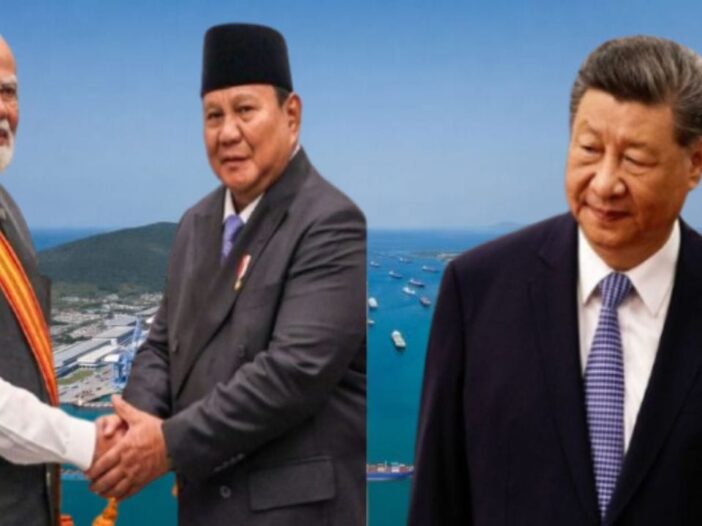
Till now China thought that it could escape through the Strait of Hormuz, but by signing the Sabang Port MoU with Indonesia, India has put a strategic lock on the exit gate of this entire energy highway. Actually, Chinese oil tankers have to pass through the Indian Ocean and go through the narrow Strait of Malacca. This is a path where India is now in a position to strengthen its hold.
100-mile “impenetrable security wall”
India’s Andaman and Nicobar Islands are located at the entry point of the Strait of Malacca, while Indonesia’s Sabang Port is at the other end. The distance between the two is only 100 miles (about 160 km). After this agreement, the Indian Navy has got direct access to Sabang Port for logistics, refueling and repairs. This means that India and Indonesia are jointly developing a “chokepoint” at the mouth of the Strait of Malacca, which will enable India to keep a direct eye on every Chinese ship and submarine passing through there.
‘Malacca’: Headache for China
China receives 80% of its oil imports through the Strait of Malacca, a route it considers its greatest weakness. If China tries to do any aggressive action on LAC (like Ladakh or Arunachal border), then India is ready to give a befitting reply at sea. But at present this does not seem to be happening.
By taking advantage of this new “Andaman-Sabang Axis” chokepoint, India can interdict China’s oil supplies and its vital lifeline. Since China has only limited oil reserves as backup, the blockade of this route will bring its economy and military machinery to its knees.
China’s concern increased due to missile deal
The BrahMos and Astra missile defense deals with Indonesia further increase the strategic threat to China. By equipping Indonesia with these deadly missiles, India has ensured that not only the Indian Navy but also Indonesia is fully capable of thwarting any aggressive naval activity by China at this Malacca chokepoint.

Leave a Reply