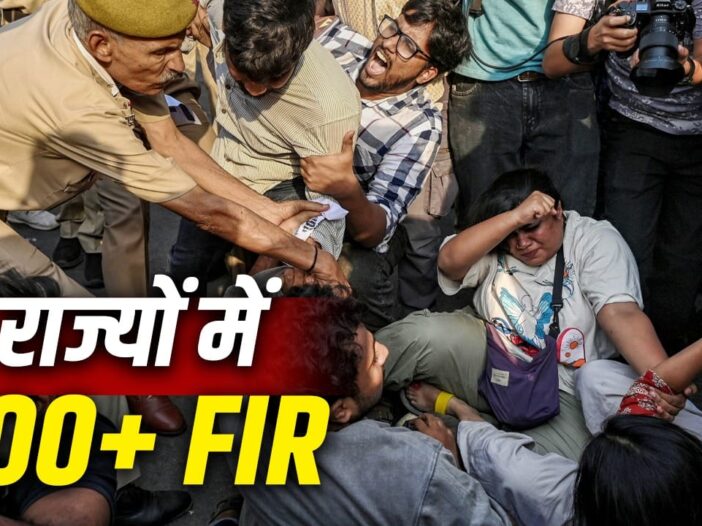
Apart from Delhi, students took to the streets in different parts of the country demanding NEET paper leak and resignation of Dharmendra Pradhan. During this period, police took strict action in many states, lathicharged and hundreds of students were detained. The Supreme Court has given instructions to provide relief to the students who are protesting peacefully, but has also made it clear that those with criminal records or those involved in violence will not get the benefit. After the student movement across the country, the biggest question now is when will the FIRs registered against students be withdrawn.
Police say that thousands of suspects and people with criminal background were also involved under the cover of the demonstration. In such a situation, it seems difficult to withdraw more than 100 FIRs immediately until the identification of students and miscreants is completed. After all, how many cases were registered in which state, how many are being withdrawn and where is the problem in the Supreme Court order, let us understand…

1. 20 cases and 2800 suspects in Delhi
During the protests in Jantar Mantar and other areas of Delhi, the police had registered a total of 20 cases (FIRs). Police investigation revealed that there were about 2800 people who spread violence and disturbance under the guise of the movement, who had old criminal records or were habitual criminals. In this way, more than 3000 miscreants have been identified across the country.
2. Process of withdrawal of 64 FIRs started in Bihar
There was a big demonstration in Bihar on 25th July against NEET paper leak and in support of CJP. 694 people were detained in the police action. Of these, about 405 people are still in judicial custody. The state government has started the process of withdrawing 64 FIRs related to the protest. 27 FIRs related to students’ protest in Patna district are being withdrawn. According to Patna Public Prosecutor Rajesh Kumar, the release of students is expected to start from Wednesday after the completion of the legal process.
3. Instructions to withdraw all FIRs in Maharashtra
There were demonstrations in Maharashtra on 23 and 24 July in many cities including Mumbai, Pune and Nagpur. Apart from this, demonstrations were going on across the state in support of the students since July 18. In Mumbai alone, 13 FIRs were registered between July 18 and July 23, in which the names of 400 people are included. Chief Minister and Home Minister Devendra Fadnavis has instructed the Home Department to withdraw all FIRs related to the protest. Most of the cases are related to illegal assembly. However, the government has not yet made public the total number of FIRs.
4. 5 cases returned in Assam
The Assam government has decided not to take action against the students. According to Ajay Tiwari, Additional Chief Secretary of the Home Department, 5 cases related to the protest will be withdrawn and the process of releasing the 13 arrested people has been started.
5. 16 arrested in West Bengal, all granted bail
There was a clash during the demonstration in Kolkata. Kolkata Police had registered 7 FIRs. Following the order of the Supreme Court, 16 people arrested got bail on Tuesday. The state government has also clarified that no punitive action will be taken against the students.
6. No FIR in Rajasthan, relief in UP-MP
After the meeting between student leaders and government representatives in Rajasthan, the government has made it clear that no FIR has been registered against the protesters nor will any further punitive action be taken. At the same time, during the protests against NEET paper leak in Uttar Pradesh, Madhya Pradesh and other states, some students were taken into precautionary custody. After the strict remarks of the Supreme Court, the police of these states have also started the process of withdrawing or canceling the complaints filed against students without criminal records.

No relief for those with criminal background
The Supreme Court has made the distinction between students and miscreants. The students who were protesting peacefully against the shortcomings of the NEET system will be given relief. But those who have prior criminal history or who have been found involved in violence, vandalism and disturbing law and order, their cases will not be withdrawn. The government and police are now identifying the protesters. The investigation is to see who was a genuine student and who participated in the violence under the guise of agitation.

What will happen next?
Withdrawal of FIR is not possible only by the government’s order. The legal process will have to be completed. For this, Section 321 of the Criminal Procedure Code (CrPC) (Section 360 of the Indian Civil Defense Code – BNSS) is used. Under this, the public prosecutor (government lawyer) of the state government seeks permission from the court to withdraw the case. Only after the judge is satisfied, the case is formally closed and the accused are released. This is the reason that despite the order, it is taking 2 to 3 days for the students to come out of jail.

Leave a Reply