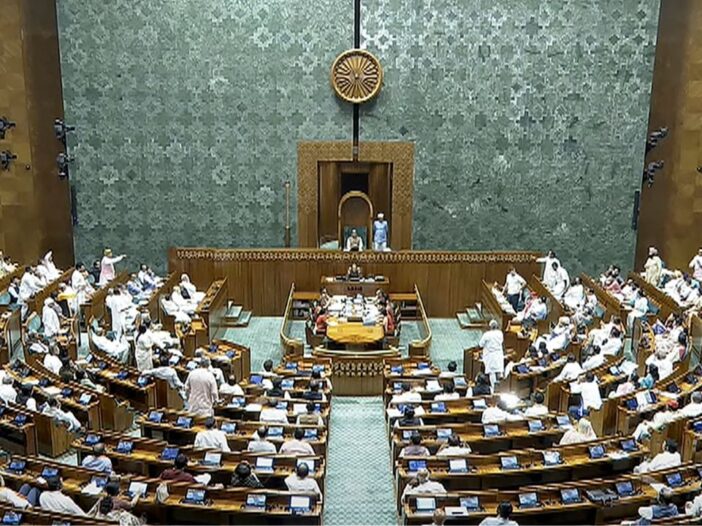
Joint Parliamentary Committee i.e. JPC has prepared its draft report on ‘Developed India Education Foundation Bill’. The purpose of this bill is to bring the higher education sector of the country under the purview of a single regulator instead of multiple regulators. The final report of the committee will be submitted to the Lok Sabha Speaker next week and the government plans to introduce the bill in the current monsoon session of Parliament. In its recommendation, the committee has recommended creating a single regulatory body in place of multiple regulatory bodies in the field of higher education, such as UGC, AICTE and NCTE.
What are the important recommendations of the committee?
- The committee supported a unified system instead of multiple regulatory bodies. According to the committee, this will reduce 54 rules to 12, which will reduce duplication and make compliance easier.
- The committee recommended safeguarding cooperative federalism. The committee has recommended that structured representation of states and union territories be ensured in the commission and councils. Also, it should be made clear that state universities will continue to operate under the laws of the state.
- The committee has recommended making consultation with stakeholders, universities and state governments legally mandatory in the Bill itself, before taking decisions regarding rules, standards or oversight.
- The committee has recommended maintaining the autonomy of IITs, IIMs and institutions of national importance. The committee has said that Section 49, which protects institutional autonomy, should be kept intact, and they should be compulsorily consulted before making rules affecting these institutions.
- The committee has recommended using both Hindi and English names. The Committee has said that both Hindi and English names should continue to be used in all official communications for the Commission and Councils, to improve their reach and international recognition.
However, in the committee meetings, the members have also raised many objections, which they are preparing to include in the final report through a dissent note. The biggest complaint of the opposition regarding this bill was that it could lead to more concentration of regulatory powers in the hands of the central government, due to which there is a possibility of weakening of educational autonomy and federalism. State governments fear that since education is in the concurrent list, it will weaken the rights of the state governments.
What did Education Minister Dharmendra Pradhan say?
This Bill is being criticized because of Section 15(3)(g), which states that the proposed Higher Education Commission will be bound to follow the policy directions of the Central Government and in case of disagreement, the decision of the Government will be final. However, Education Minister Dharmendra Pradhan has said that this provision is not different from the existing legal framework. The bill has been sent to the Joint Parliamentary Committee consisting of 21 members of the Lok Sabha and 10 members of the Rajya Sabha.

Leave a Reply