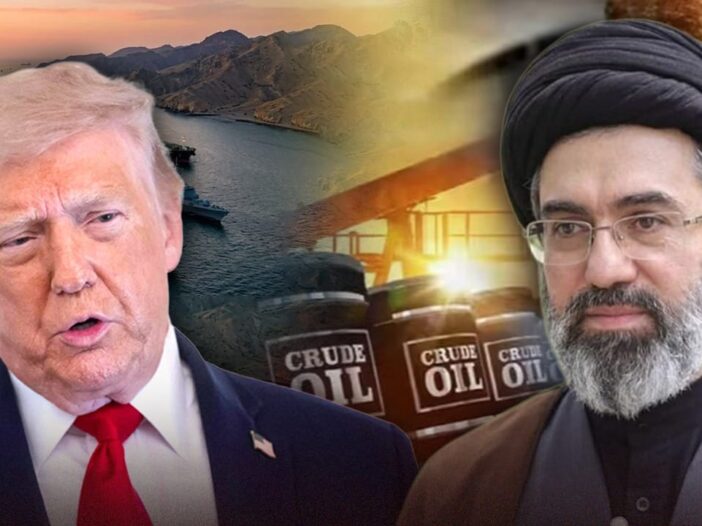
Qatar and Pakistan, brokers of peace talks in Switzerland, said the US and Iran have agreed on “a roadmap to reach a final deal within 60 days”, which they described as “encouraging progress” on the first day of high-level talks in Switzerland. The discussions followed the signing of a 14-point Memorandum of Understanding (MoU) on June 17, which created a framework for de-escalation between Washington and Tehran and laid the groundwork for further talks. This achievement was achieved after an 18-hour marathon meeting in Lake Lucerne, in which senior officials of both the countries participated.
after this American The Treasury issued a 60-day Iran-related general license for oil sales. The US Treasury Department has issued a general license for Iran that allows the production, delivery and sale of crude oil and petrochemical and petroleum products of Iranian origin until August 21.
Treasury Secretary Scott Besant said in a post, “In line with ongoing negotiations in Switzerland, Iran has agreed to allow free and open transit in the Strait of Hormuz and the International Atomic Energy Agency [IAEA] “We have promised to allow inspectors from India to visit our country.”
Consent to form ‘De-Conflict Cell’
On the other hand, the joint statement also announced the creation of a “de-conflict cell” aimed at ending Israel’s military operations in Lebanon, as well as a high-level committee and direct communication channels to support further negotiations.
US Vice President JD Vance led the Washington delegation along with President Donald Trump’s son-in-law Jared Kushner and Special Envoy Steve Witkoff, while Iran’s delegation was led by Parliament Speaker Mohammad Bagher Ghalibaf and also included Foreign Minister Abbas Araghchi.
Formation of high-level committee, communication channel
According to a joint statement issued by Qatar and Pakistan, which acted as mediator in the talks, a high-level committee has been formed to “provide political oversight on the mediation”. The statement said the committee “has agreed on a roadmap to reach a final deal within 60 days”, and further technical talks are expected to continue over the next two months.
It further said, “The Chief Negotiator will report regularly to the High Level Committee and lead working groups focused on nuclear, sanctions, and effective implementation of the MoU and other matters.”
However, experts say the next phase of technical negotiations may be more difficult than a political agreement and may ultimately take longer than the 60-day timeline mentioned in the interim deal.
The agreement comes at a time when many major questions remain unresolved, including whether Iran will be allowed to continue enriching uranium, what will happen to its stock of highly enriched uranium, what will be the scope of international inspections and what will be the timeline for sanctions relief?
JD Vance appreciated the conversation
The parties have also established “a communication line” focusing on the Strait of Hormuz to “avoid any incidents and misunderstandings with the aim of ensuring safe passage of commercial vessels through the Strait of Hormuz.”
The announcement comes at a time when maritime traffic is increasingly being disrupted through this strategic waterway, through which one-fifth of the world’s oil and gas passes. On Sunday, 12 ships crossed the strait, while the number was 35 the previous day. Iran’s actual blockade of the strait created a worldwide energy crisis, which affected the world economy.
On Monday, Vance said the two parties would create “coordination mechanisms,” one to oversee the ceasefire in Lebanon and the other to remove mines from the Strait of Hormuz. Vance said technical talks will move forward, and will continue in the “coming weeks and days.” He said technical teams from the US and Iran would continue negotiations on peace terms with “proper supervision”.
Read this also- Middle East Tensions: Tension increases again in Hormuz, America’s big attack on Iran after Apache helicopter case

Leave a Reply