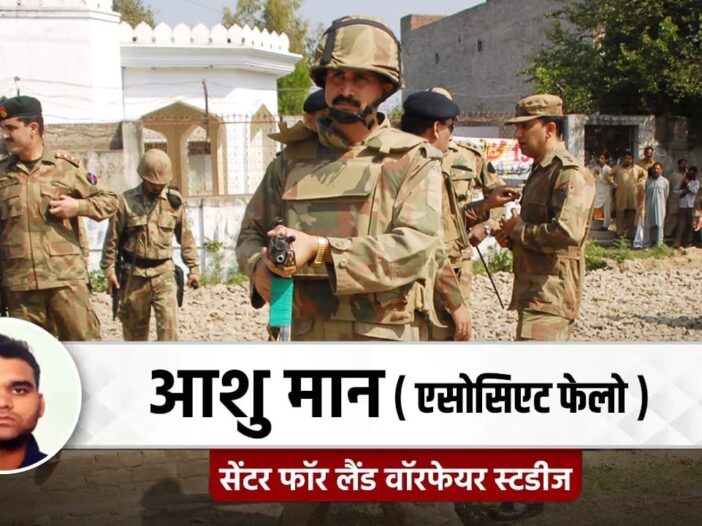
On June 15, 2014, Pakistan Army launched Operation Zarb-e-Azb in North Waziristan. This operation was started a few days after a major terrorist attack on Jinnah International Airport in Karachi. Pakistan Taliban (TTP) had taken responsibility for this attack. Pakistan government and army said that this military action was necessary to eliminate terrorist organizations and their bases operating in North Waziristan. The government called it a decisive campaign against terrorism, but the biggest impact of this campaign was on the common citizens.
According to data from the United Nations (UN) and the Internal Displacement Monitoring Center (IDMC), due to this military operation, more than 1 million people from North Waziristan were forced to leave their homes. By August 2014, about 95 thousand families had been displaced. It was one of the largest displacement crises in South Asia during that decade.
Most of the families reached Khyber Pakhtunkhwa
Thousands of families left their belongings and ran towards safe places. Most of the people reached Bannu district of Khyber Pakhtunkhwa province. Apart from this, a large number of people also went to districts like Dera Ismail Khan, Lakki Marwat, Kohat, Karak, Hangu and Charsadda. Government reports also said that some displaced families had reached Sindh province.
Relief camps were built for these people, but there were not enough arrangements for such a large population. The relief camps and temporary shelters were under heavy pressure from the very beginning. UNICEF and other aid agencies found that there were serious sanitation problems in many camps. There was a shortage of clean drinking water and basic facilities like toilets were also not adequate. The situation of those who were living in temporary settlements outside the registered camps was even worse.
The displaced people had to face these problems
The food and drink system was also weak. Many families were not getting ration as per their requirement. On the other hand, hospitals and health centers also came under immense pressure. These hospitals were already built according to the needs of the local population, but due to the sudden arrival of lakhs of people, the system collapsed. Infectious diseases started spreading. Problems started arising in the treatment of pregnant women and treating injured people coming from war affected areas also became a big challenge. The relief and health systems remained under constant pressure throughout the campaign.
During this military operation there was massive destruction in North Waziristan. Pakistan Army destroyed many houses, schools and commercial buildings. The army said that these places were being used by terrorists. But for the local people it meant that they had lost everything. Many old markets, which had been the center of local trade for generations, were destroyed. Small factories, workshops, gardens and family businesses also disappeared.
Ground situation is different in Waziristan
The Pakistan Army later declared this operation successful, but the ground situation told a different story. Even six years after the start of the campaign, many areas of North Waziristan had become unfit for habitation. Many people wanted to return to their homes, but basic facilities were not available there. Due to this, resentment towards the Pakistan government and army increased among the local people. He believed that after the campaign ended, the government did not pay enough attention to their problems.
The Government of Pakistan started programs for the return of displaced people from time to time. By mid-2016 the army claimed that about 61% of the people had returned to their homes. The plan was to complete the return of the remaining people by December 2016. However, many observers and human rights organizations said that the withdrawal process was carried out according to the timeline set by the army rather than the needs of the people.
The issue of compensation also became a cause of controversy. People whose houses, shops and properties were destroyed did not receive equal compensation. Many families complained that even years after the operation ended, their losses were not even surveyed. Some people were still waiting for proper compensation.
Why is it difficult to compensate for the loss?
The impact of this entire crisis was not limited to homes and properties only. The social structure of North Waziristan was also badly affected. For a long time, the Jirga system and the network of tribal elders played an important role in maintaining social order. Due to displacement, families scattered in different areas. Due to this, traditional social relations weakened and the interconnectedness of communities started breaking. Experts say that buildings can be rebuilt, but rebuilding the social fabric is much more difficult.
Another important thing was that Pakistan did not make any national policy for Internally Displaced People (IDPs) during or after Operation Zarb-e-Azb. Many social organizations and international organizations had demanded that laws should be made for safe evacuation of civilians during military operations, clear timelines for returning home and restoration of livelihoods. But very little progress was made on these demands.
As time passed, the side effects of this displacement increased further. Many families fell into debt after living in relief camps for years. Thousands of children missed their education. People whose businesses were destroyed in North Waziristan did not have the capital to start new businesses elsewhere. Disruptions to education and economic hardships created a cycle of poverty that continued years after military operations ended.
Common people paid the cost of the operation
The Pakistan government still claims that Operation Zarb-e-Azb made North Waziristan safe and eliminated the strength of terrorists. However, many experts do not completely agree with this claim, because in later years also many security operations had to be conducted in the area. But almost everyone agrees on one thing that this military operation created a huge humanitarian crisis. Pakistan’s civil organizations were neither prepared nor had sufficient resources to help such a large number of displaced people.
It was not the terrorists but the common people who paid the biggest price for this entire crisis. Farmers, shopkeepers, teachers, laborers, women and children lost their homes, employment, education and a large part of social life. Even after 10 years of the operation, thousands of families have not been able to fully recover from their loss and are still suffering its effects even today.
Also read: Epstein knew about my affairs, used to blackmail me: Bill Gates

Leave a Reply