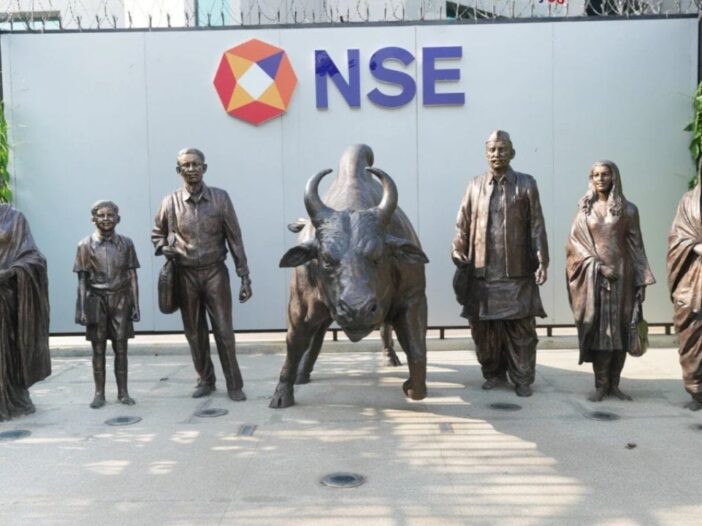
The long-awaited initial public offering of the National Stock Exchange may move closer to reality on Wednesday. The exchange is expected to file its draft red herring prospectus with the Securities and Exchange Board of India this evening. The proposed public issue is expected to be a purely ‘offer for sale’, in which the existing shareholders together will sell about 6 per cent of the equity of the exchange.
Based on an unlisted market valuation of around Rs 5 lakh crore, market experts estimate the issue size to be around Rs 30,000 crore, making it one of the largest IPOs in India’s capital market.
Interestingly, as per the proposed share sale structure, Life Insurance Corporation of India (LIC), the country’s largest insurance company and shareholder of the exchange, will not be among the selling investors. The sellers include BOB, GIC, NIC and Mauritius-based shareholders.
These giants can sell stake
Money Control report quoting merchant banking sources said that State Bank of India (SBI) may emerge as the largest seller shareholder, which will offer up to 24.75 million shares. MS Strategic (Mauritius) Ltd. may sell up to 16 million shares, while Canada Pension Plan Investment Board is expected to offer up to 11.87 million shares.
Other proposed sellers include Aranda Investments (Mauritius) Pvt Ltd, which may sell up to 11.24 million shares, while Bank of Baroda and Stock Holding Corporation of India Ltd are expected to offer about 11 million shares each.
General Insurance Corporation of India (GIC Re) can sell up to 10.65 million shares and The New India Assurance Company Limited can sell up to 10.5 million shares. National Insurance Company Limited and United India Insurance Company Limited are likely to sell about 6 million shares each.
These 10 giants can sell stake
| share holder | How many shares can be sold (in millions) |
| SBI | 24.75 |
| MS Strategic (Mauritius) Limited | 16 |
| Canada Pension Plan Investment Board | 11.87 |
| Aranda Investments (Mauritius) Private Limited | 11.25 |
| Bank of Baroda | 10.98 |
| Stock Holding Corporation of India Limited | 10.89 |
| General Insurance Corporation of India | 10.66 |
| The New India Assurance Company Limited | 10.50 |
| National Insurance Company Limited | 6 |
| United India Insurance Company Limited | 6 |
When was the IPO approved?
Before the filing, the IPO committee of the exchange met and completed the process. The board of NSE had approved DRHP on Monday. The board of NSE approved the proposed IPO on 6 February. Earlier in January 2026, the exchange had received ‘No Objection Certificate’ (NOC) from SEBI, paving the way for its long-awaited listing. The regulator’s approval was significant because it was set aside from the disposal of some long-pending cases, primarily related to alleged regulatory violations related to co-location.
The listing was stalled since 2016
The DRHP filing will be a major milestone for India’s largest stock exchange. Its listing plans were stalled for almost a decade due to regulatory concerns, especially over the co-location controversy. NSE currently has about 1.8 lakh shareholders.
The exchange had first filed draft offer documents for OFS worth about Rs 10,000 crore in 2016. However, SEBI later advised it to withdraw the proposal amid governance concerns related to the co-location issue.
Since then, NSE has made several governance and compliance reforms and has made several representations to the regulator to seek approval for its listing. As part of preparations for its recent IPO, the exchange has appointed 20 merchant bankers along with legal advisors and other intermediaries.
settlement application
NSE had filed a settlement application in the co-location case on June 20, 2025. In this case, some brokers were accused of getting priority access to the trading system of the exchange. The exchange later offered to pay Rs 1,387.39 crore to settle the case.
Earlier, media reports had said that SEBI’s High-Powered Advisory Committee (HPAC) had recommended settling the case for around Rs 1,880 crore. This included approximately Rs 1,200 crore as disgorgement (return of unfair profits), approximately Rs 380 crore as interest and the remaining amount as other settlement charges. It is believed that this recommendation is pending with the panel of whole-time members of SEBI for consideration.

Leave a Reply