Efforts to promote flex-fuel vehicles (FFV) in India are facing challenges in the initial stages. According to data from the government vehicle portal, only four flex-fuel cars have been registered in Delhi since the entry of this technology in India’s passenger vehicle market last month.
In June, when the country’s first flex-fuel passenger car was launched, three cars were registered. After this, only one more car was purchased in July. During this time, another company had also launched a flex-fuel motorcycle.
What are flex-fuel vehicles?
Flex-fuel vehicles (FFV) can run on petrol, ethanol or a mixture of the two. They can also use fuels with higher ethanol content like E85 and E100. Compared to normal petrol vehicles, these are fitted with ethanol-resistant parts, special injectors, re-calibrated engine control unit (ECU) and sensors that automatically adjust engine performance according to the fuel mixture.
Price and availability of fuel
The starting ex-showroom price of flex-fuel cars in Delhi is around Rs 7.2 lakh. At the same time, the price of flex-fuel motorcycles ranges between Rs 72,792 to Rs 1.24 lakh. E85 fuel used in these vehicles is currently available at some selected petrol pumps in Delhi, the price of which is around Rs 82 per liter.
Why is the government emphasizing on ethanol?
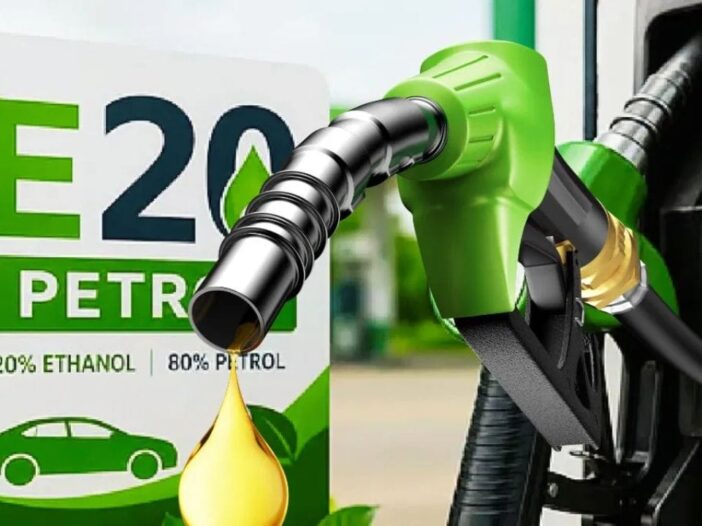
The aim of the government is to reduce India’s dependence on crude oil imports by mixing ethanol in petrol. However, in recent times the debate regarding E20 fuel has intensified. Some people claim that this reduces mileage and can damage the engine. However, there is no solid scientific evidence yet to support these claims. Still, this debate is creating doubts in the minds of potential buyers.
dominance of electric vehicles
Amit Bhatt, managing director of International Council on Clean Transportation (ICCT) India, says that it will take time to prepare the necessary infrastructure for flex-fuel vehicles. Currently, there are very few models of such vehicles in the market. He said that the current policy of Delhi is completely focused on promoting electric vehicles (EV). In such a situation, most of the buyers adopting alternative technology are choosing electric vehicles. He says that ethanol is definitely a cleaner fuel than petrol, but flex-fuel vehicles also produce exhaust emissions, which increases air pollution. That’s why people are getting more attracted towards EVs.
Brazilian example
Amit Bhatt told that in countries like Brazil, the government keeps ethanol cheap and there the price of ethanol blended fuel is much lower than petrol. Despite this, the share of electric cars in the total sales there is only about 10%.
E20 controversy also had an impact
Anil Chhikara, a transportation expert at the Asian Institute of Transport Development, believes that the ongoing debate over E20 fuel has also affected the sales of flex-fuel vehicles. According to him, the moment these new models came into the market, the controversy regarding E20 also started. This weakened people’s confidence and affected sales.
government should use it itself
Anil Chhikara says that if the government wants flex-fuel vehicles to be adopted on a large scale, then first of all government departments should start using them. This will increase people’s confidence. He says that people’s experience and positive opinion of others play the biggest role in accepting new technology.
Lack of service and fuel is also a big reason
A former Delhi government official, who worked on the transition from CNG to electric vehicles, says that at present there are very few fuel stations with high ethanol blends. Besides, the options for flex-fuel vehicles in the market are also limited and the service network for these has also not been developed yet.
However, he believes that in the coming time, as more models and better infrastructure become available, the sales of these vehicles will also increase. He said that India spends billions of dollars every year on the import of crude oil, which has a direct impact on the country’s economy. In such a situation, promoting alternative fuels like ethanol can prove beneficial in the long run.

Leave a Reply