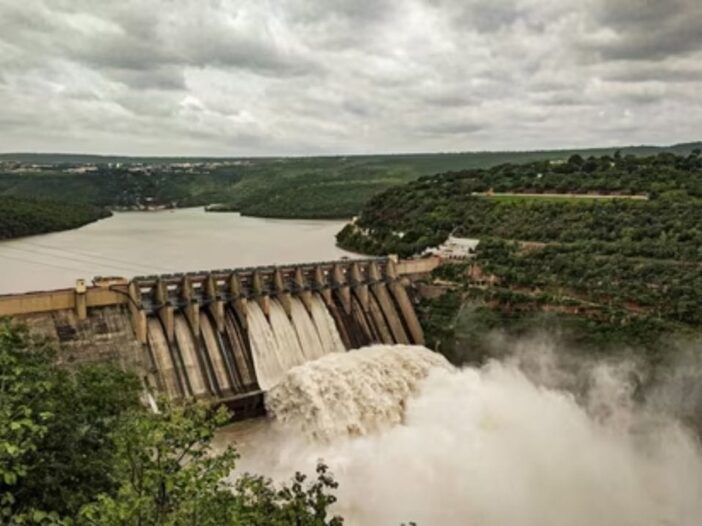
China has officially started construction of the world’s largest hydroelectric dam on the lower reaches of the Yarlung Tsangpo River in Tibet. This 60,000 MW Medog Hydropower Project, being built just 50 kilometers away from the border of Arunachal Pradesh, is an ambitious plan of China. This dam is also being called a water bomb for India.
In direct response to this move by China, India has started carrying forward the Siang Upper Multipurpose Project SUMP on the Siang River in Upper Siang and Siang districts of Arunachal Pradesh. After the construction of SUMP, operated by the government company NHPC, it will become India’s largest hydropower project. Its estimated cost is about 13 billion dollars i.e. about Rs 1.5 lakh crore and it will generate 47 billion units of electricity annually.
China’s work in full swing
Comparison of both the projects clearly shows the challenge facing India. While the construction work of China’s 60,000 MW Medog project is going on at a fast pace, India’s SUMP is still in the initial study and pre-feasibility stage. The ground work related to its construction has not started yet. According to reports, China’s project is much bigger in capacity than SUMP. India is now trying to intensify its strategic response by keeping a close watch on every activity of Beijing on the disputed river.
Danger on Brahmaputra
Yarlung Tsangpo enters India as Siang River and later merges with Brahmaputra. This is the lifeline of crores of people of Arunachal and Assam. Experts say that building such a big dam in the upper part of the river can completely change the flow of water. This can destroy the local ecosystem, destroy agriculture and cause sudden dangerous floods in low-lying areas.
India is keeping an eye
In a written reply in the Lok Sabha, the Center confirmed that it is closely monitoring all activities related to the Brahmaputra river basin, including Chinese hydropower schemes. The government has promised to take necessary steps to protect lives and livelihoods in low-lying areas. New Delhi has consistently put pressure on Beijing for transparency, data sharing and prior consultation in all cross-border river projects, although these demands have yielded limited results so far.
SUMP is not just for generating electricity, it is specifically designed to control seasonal floods and protect Indian areas from the dangers of diverting water upstream. This dual purpose makes it more geopolitically important than economically. Currently, New Delhi is strengthening flood forecasting systems, river monitoring networks and infrastructure in the Northeast to deal with the risks.

Leave a Reply