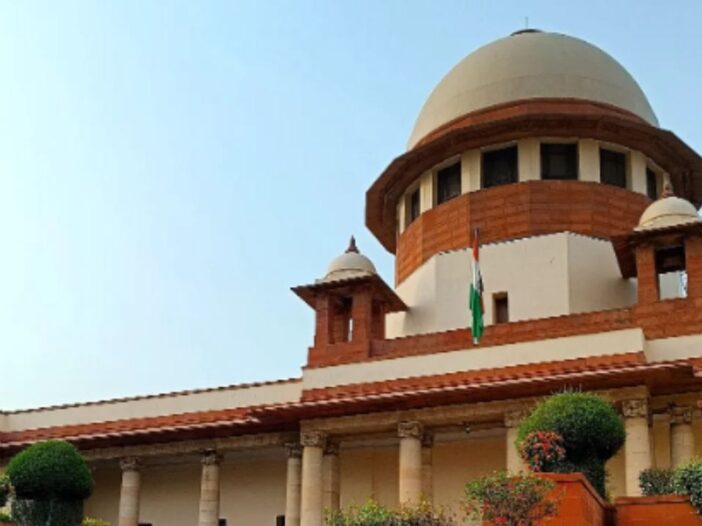
The West Bengal government has withdrawn its appeal filed in the Supreme Court against the decision of the Calcutta High Court canceling the status of 77 communities included in the OBC list of the state. This decision was taken after the change of government in the state. On Monday, Solicitor General Tushar Mehta told in the Supreme Court that the state cabinet has decided to withdraw the appeal. After this, the State Backward Classes Commission also withdrew its separate petition. The Supreme Court gave permission to withdraw both the appeals. However, the court also made it clear that if any other affected party wishes, he can continue his appeal in this case.
Why did the government withdraw its appeal from the Supreme Court?
This matter is related to the decision of the Calcutta High Court of 22 May 2024, in which the status of 77 communities included in the OBC list of the state was cancelled. These included 75 Muslim communities. At that time, Mamata Banerjee government had challenged the decision of the High Court in the Supreme Court. Now after the change of government in the state, this attitude has changed. In the Supreme Court, before the bench of Chief Justice Surya Kant, Justice Joymalya Bagchi and Justice V. Mohan, Solicitor General Tushar Mehta said that the state cabinet has decided to withdraw the appeal. After this, the court allowed both the state government and the State Backward Classes Commission to withdraw their respective appeals.
Why did the High Court cancel the OBC status of 77 communities?
The Calcutta High Court, in its judgment in May 2024, had canceled the reservation of 77 communities added to the OBC list between April 2010 and September 2010. Apart from this, under the West Bengal Backward Classes Act, 2012, reservation of 37 other classes included in the OBC category was also cancelled. The court had said that religion appears to be the main basis for granting OBC status to these communities, which is not in accordance with the Constitution. The High Court had considered these inclusions illegal and unconstitutional. Challenging this decision, the State Government and the Backward Classes Commission had reached the Supreme Court.
What did the Supreme Court say and what will happen next?
While giving permission to withdraw both the appeals, the Supreme Court made it clear that its order will not stop the way for any other affected party. Senior advocate Shadan Farasat had sought permission to pursue separate petitions on behalf of some affected people. The court said that if any other party has a complaint with the decision of the High Court, then he can continue his appeal. In this case, the Supreme Court had already stayed further proceedings in the High Court on 6 November 2024. At that time, the top court was hearing a total of 10 petitions, including that of the state government, in which the High Court’s decision of May 2024 was challenged.
Also read: What is the law of Home Ministry, due to which 180 Dargah-Mosques will be demolished in Rajasthan?

Leave a Reply