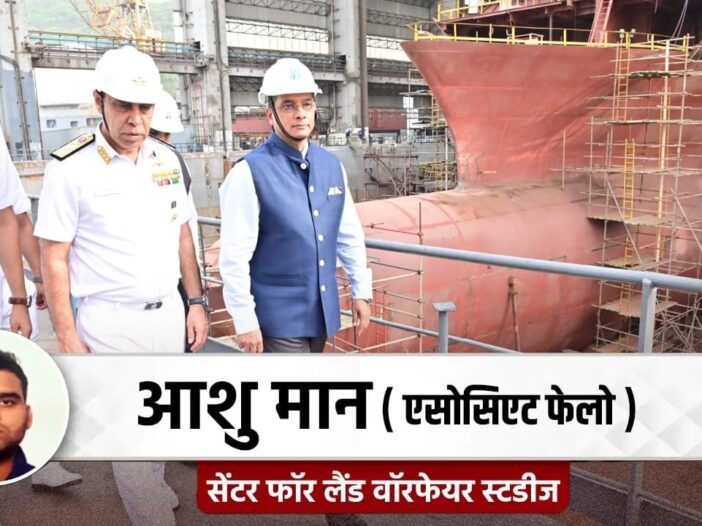
Vice Chief of the Indian Navy Vice Admiral Tarun Sobti visited HSL’s Visakhapatnam facility on 6 July. Here Chairman and Managing Director Rear Admiral Chandrasekaran Raghuram (Retd) informed him about the yard’s recent projects, capacity enhancement work and infrastructure development. After this, in his address, DCNS laid out a vision for HSL, which is not limited to just the completion of a ship, but talks about being with it for its entire operational lifecycle. He said the Navy “wants to work with HSL as a strategic partner, not just a shipbuilding yard.” He clarified that this should also include full lifecycle support, upgrades and mid-life upgrades.
In many cases HSL is already doing such work. This public sector undertaking of the Defense Ministry has carried out major overhaul and modernization of the Navy’s Kilo-class submarines, including INS Sindhukirti, INS Vela and INS Wagli. Currently, work is going on mid-life modernization of INS Sindhukirti. HSL had also refit INS Sindhuvir before handing over to Myanmar. This is an example of such long-term maintenance, which the Defense Ministry now wants to implement as a permanent arrangement instead of a one-time contract.
Preparation to build submarine
In order to strengthen India’s domestic submarine industry base and reduce dependence on foreign shipyards, HSL will no longer be limited to just repair and modernization. He is preparing to build a submarine in collaboration with Mazgaon Dock Shipbuilders Limited. If this agreement goes through, HSL will move beyond a simple shipbuilder and play a new business and technical role. This model will be similar to the shipyards of many navies of the world, where the focus is more on long-term maintenance and support of ships.
However, Vice Admiral Sobti said that this new responsibility is not the beginning of any big risk, but an extension of the trust already built. He described HSL as a “trusted partner of the Indian Navy for a long time” and said that as India’s maritime sector progresses, HSL will also be an important part of its growth. He also made it clear that despite getting the new role, basic expectations will not change. He said, “Quality and timely completion of work is of utmost importance.” He said that even after increasing responsibilities, work performance will remain the biggest parameter.
He further said that how well HSL will be able to implement this lifecycle support model will depend on the experience and number of its employees. “The most important aspect is people’s experience,” DCNS said. He expressed confidence that HSL has gained good experience in this direction and will continue to improve in future also. Being a Mini Ratna Category-I public sector undertaking, HSL’s board has the financial freedom to take quick decisions related to capital expenditure and technology partnerships. For this, there is no need to take prior approval from the government every time. If the Navy goes ahead with this plan, HSL will also have the potential to generate consistent and long-term revenue from maintenance and upgrade contracts instead of relying solely on orders to build new ships.

Leave a Reply