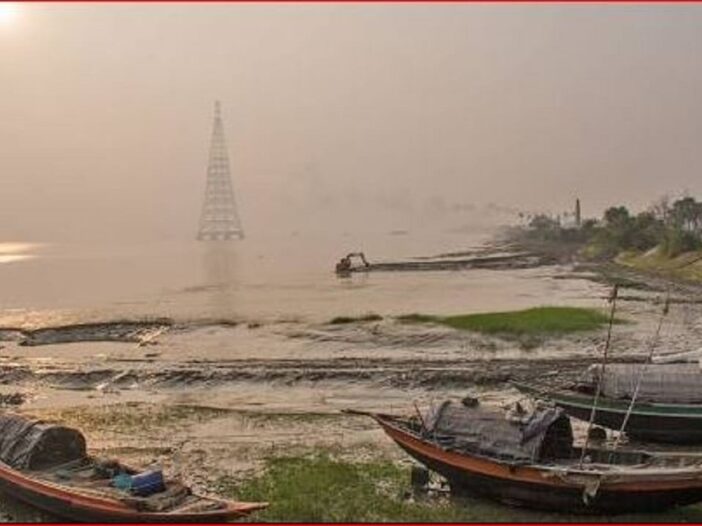
West Bengal Mysterious Place: Diamond Harbour, situated on the banks of Hooghly River in South 24 Parganas district of West Bengal, may seem like a quiet river port or a place to visit on weekends, but its history is very glorious and full of mysteries. This region contains within itself the terror of pirates, the historical trade of salt and many ups and downs of the colonial period. If we turn the pages of history, we come to know that what we call Diamond Harbor today, its original name was ‘Chingrikhali’. The reason behind this name is believed to be the abundance of lobsters (Chingri) in the Hooghly River or the influence of the local ‘Chawar’ tribe. With time this name changed to Hajipur, which became known as the Dargah of Machland Pir and the shelter of plague patients.
Later, considering its geographical importance, the British rulers named it ‘Diamond Harbour’. Interestingly, the name ‘Diamond’ was not because of any precious gem, but because of the white salt trade that took place here. At sunset, the heaps of salt deposited on the banks of the river used to shine like diamonds, seeing which the British gave it this name. The East India Company’s Gazetteer of 1851 also provides evidence of it being an important trading port.
Fear of pirates and Chingrikhali Fort
In the 16th and 17th centuries, this entire area trembled with the terror of Mughal and Portuguese pirates (who were called ‘Harmad Vahini’). For protection from these robbers and to drive them away, the British built ‘Chingrikhali Fort’ here in 1868-69, which was also called ‘Old Fort’ by the local people. Today the remains of this fort are almost destroyed, but this place testifies to the bloody conflicts of that period.
The first laboratory of modern communication and the freedom movement
Diamond Harbor has also made a major contribution to the modern development of India. In the year 1851, the country’s first telegraph line was laid between Kolkata and Diamond Harbor. In 1857 it was made the sub-division headquarters. Famous litterateur Bankim Chandra Chattopadhyay also served as Deputy Magistrate here in 1864. The railway line was extended here in 1883, which connected it to the modern world. During the freedom struggle, the people here took part enthusiastically in the Salt Satyagraha of 1930 under the leadership of lawyer Charuchandra Bhandari, whose memories are still preserved in the ‘Khadi Mandir’ here.
Remains of a two thousand year old civilization
The antiquity of this region is not limited to just the British or Mughal period. The port of Palaura mentioned in the texts of the famous astronomer Ptolemy is linked to the village of Abdalpur or Parul of the same region. The stone weapons of the Gupta period, terracotta sculptures and the remains of the ancient temple of Deulpota found here prove that even about two thousand years ago, this river bank was the center of a rich and developed civilization. Even though today that old fort and the shine of salt have disappeared, history is still alive in the air here.

Leave a Reply