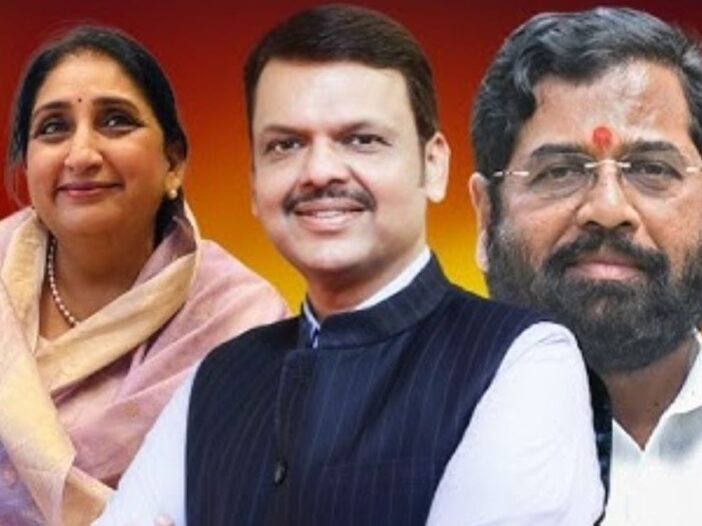
After a long brainstorming in Mahayuti, the distribution of seats for 17 seats of Maharashtra Legislative Council has been decided, but along with this, dissatisfaction among the allies has also started coming to the fore. The resentment of many leaders and workers has increased the concern of the Mahayuti leadership. In the seat distribution, the biggest discussion was about the seats won by Shiv Sena.
Chief Minister Eknath Shinde’s party was demanding 6 seats, but ultimately it had to settle for only four seats. It was believed that Shiv Sena could have got an additional seat but BJP did not change its stand. On the other hand, the Nationalist Congress Party led by Ajit Pawar has got two seats. These include the seats of Pune and Raigarh.
After making Sunil Tatkare’s son the candidate for Raigarh seat, both discussion and opposition are being seen within the Shiv Sena party. Although the daughter of Raigarh MLA Mahendra Dalvi has filed her independent nomination, the resentment of some leaders at the local level still remains.
Struggle on Thane and Nashik seats
On Dharashiv-Beed-Latur seat, BJP has fielded former MLA Basavaraj Patil, who recently left the Congress and joined the party. There is dissatisfaction among the local BJP workers with this decision, because many workers were expecting the old face of the party to get the ticket for a long time. There was a lot of tussle regarding the seats of Thane and Nashik also. BJP is considered to be in a strong position in both these areas, but ultimately due to the equations of Mahayuti, BJP had to retreat. Narendra Darade from Nashik and Ravindra Phatak from Thane have been made Mahayuti candidates. Both the candidates are associated with Shinde group.
Former minister Abdul Sattar increased the problems
BJP has made Arun Lakhani its candidate from Wardha-Chandrapur-Gadchiroli seat. Arun Lakhani is a close friend of MP Supriya Sule. An interesting situation is also prevailing in Jalna-Chhatrapati Sambhajinagar seat. Shiv Sena had initially claimed this seat, but later this seat went to BJP. Here BJP’s Arun Shirsath is the candidate of Mahayuti. Despite this, former minister Abdul Sattar has created a new discussion in political circles by filing the nomination of his son Sameer Abdul Sattar.
Now everyone’s eyes are on what will be the situation till the process of withdrawal of nominations is completed. Differences within Shiv Sena have also come to light on Yavatmal seat. Minister Sanjay Rathod wanted a ticket for his wife, but the party leadership did not accept his demand. Instead, former MLA and current Legislative Council member Dushyant Chaturvedi has been made the candidate again.
Mahayuti strong on all 17 seats of Legislative Council
Overall, Mahayuti has finalized the election preparations by deciding the seat formula, but local level resentment and possible rebellion on many seats still remains a challenge. Now till the date of withdrawal of nominations, everyone’s eyes will be on how successfully Mahayuti is able to handle the dissatisfaction within itself. Looking at the current political equations and available numerical strength, Mahayuti seems to be in a strong position on all the 17 seats of the Legislative Council. The alliance has sufficient base of votes required for victory, due to which its path seems easy on most of the seats.
If the rebellion is not quelled then the path to Mahayuti will be difficult.
However, the picture is not entirely undisputed. After seat distribution, dissatisfaction and resentment have come to the fore in many areas. Supporters of some leaders and potential contenders have also shown rebellious attitude. If the Mahayuti leadership is not successful in convincing these angry leaders by the last date of withdrawal of nominations, then the contest on some seats may be more difficult than expected.
Political experts believe that if the disagreements within the alliance are not calmed down, then the Grand Alliance may have to face unnecessary challenges on one or two seats. In such a situation, the mathematics of election victory will not only depend on numerical strength, but also on the coordination between allies and the ability to pacify angry leaders.

Leave a Reply