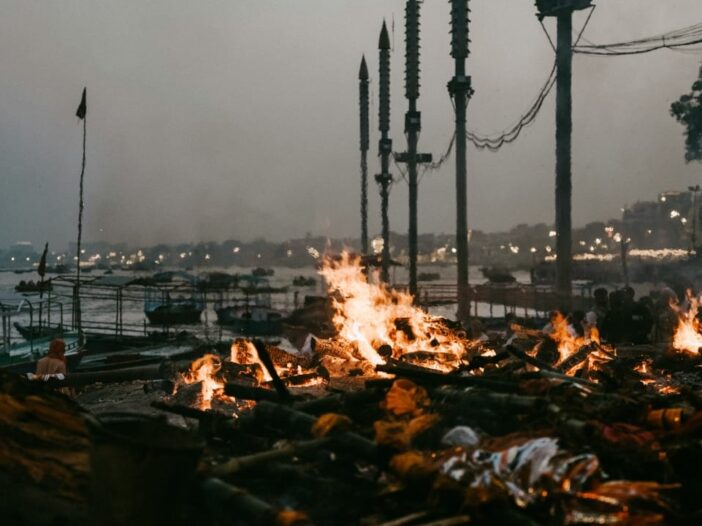
Hindu funeral rites: There is a description of 16 sanskars in Sanatan Dharma. These 16 rites end with the last rites performed after death. This sanskar has been said to be the most important compared to other sanskars. Because through this sanskar, the human body made up of the five great elements gets merged into the five great elements. Man’s salvation, afterlife and rebirth are tied to this sanskar.
This is the reason that in Sanatan Dharma, after death, the last rites are performed with full rituals. Even during the last rites, a ritual is considered very important and mandatory. This action is called Kapal Kriya. This action is very heartbreaking. Kapal Kriya is also very scary, but since this process is considered to be related to a person’s birth after birth and without it the journey of the soul remains incomplete, hence this process is necessarily performed, so let us know what Kapal Kriya is?
What is cranial function?
When a dead person is cremated, most of the ghee is poured on the mouth of the dead body and it is burnt, but even when the entire body is burning, the head is not burnt. In such a situation, to burn the body properly, it is broken by hitting the head with a stick, after which ghee is poured into it again. This process of breaking the head i.e. the skull is called Kapal Kriya.
Cranial action is necessary because
Many reasons for performing Kapal Kriya in the last rites have been mentioned in the scriptures. The skull is considered the door to salvation. Its opening is necessary for the salvation of the deceased. It is believed that if Kapal Kriya is not performed, the rituals of the present birth remain in the deceased, which trouble him in the next life also. If this action is not performed, there is a possibility of the skull being misused by Tantriks.
Disclaimer: The information given in this news is based on religious beliefs and general information. TV9 Bharatvarsha does not confirm this.

Leave a Reply