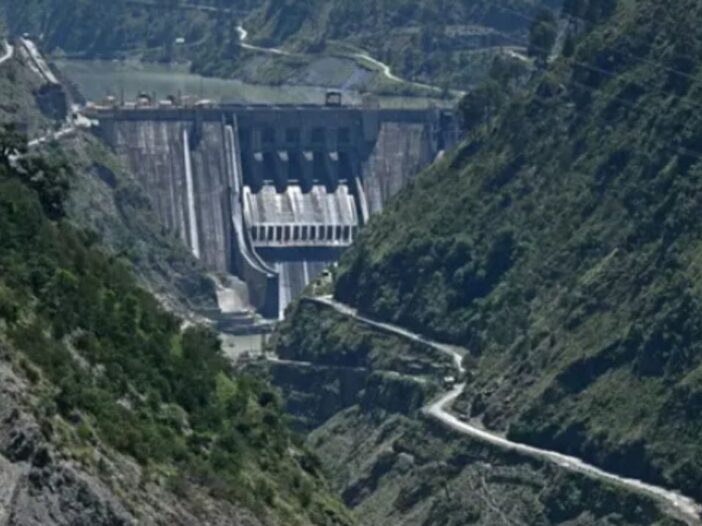
The effects of the diplomatic and strategic campaign that India had started against Pakistan after the brutal killing of 26 innocent civilians in the Pahalgam terrorist attack, are now visible on the ground. India, which has shown restraint and generosity for decades, has given a clear message that blood and water do not go together. Amidst this changed strategic environment, the Government of India has started working rapidly on those water projects, the objective of which is to ensure greater utilization of India’s share of water for the country’s farmers, industries and energy sector. The most important among these is considered to be the Chenab-Beas Link Project, on which preparations are now being made to move forward rapidly.
TV9 team reached the place in Lahaul region of Himachal Pradesh, where a plan has been made to connect the Chandra river stream to the Beas river system through a tunnel. After the completion of this project, many states of North India including Rajasthan will be able to get additional water and lakhs of farmers can benefit from it.
65 years old treaty and changing scenario
The Indus Water Treaty signed between India and Pakistan in 1960 has been counted among the most successful water agreements in the world. Under this treaty, most of the water of western rivers like Indus, Jhelum and Chenab continued to go to Pakistan’s share, while India was allowed limited use.
However, after the Pahalgam terrorist attack, India indicated a change in its stance. New Delhi said in clear words that “blood and water cannot flow together.” After this, a decision was taken to suspend the Indus Water Treaty and India started taking steps towards maximum utilization of its share of water resources.
What is Chenab-Beas Link Project?
Under this project costing about Rs 2,600 crore, water from Chandra and Bhaga rivers will be transferred to the Beas river basin through an 8.7 km long tunnel. This water will further be used for irrigation and other development works through a 113 km long canal system.
According to government estimates, about 19 lakh acre feet of additional water can be delivered to the Beas basin every year. Punjab, Haryana, Delhi, Himachal Pradesh and especially Rajasthan are expected to get huge benefits from this.
What will be the benefit to the farmers?
Many areas of Rajasthan and North India have been struggling with water crisis and irrigation challenges for a long time. After completion of the project, additional water will be available for farming in these areas. This can help in increasing agricultural production and also reduce the costs of farmers. Apart from this, the possibility of producing about 4000 MW additional hydropower from the project is also being expressed, which will strengthen the energy security of the country.
How much loss can Pakistan suffer?
Chenab River is one of the major lifelines of Pakistan’s agricultural system. Irrigation of millions of acres of agricultural land in Pakistan’s Punjab province depends on this river system. Crops like wheat, rice, cotton and sugarcane are largely dependent on this water.
If India starts using more of its share of water, the excess water flow reaching Pakistan may reduce. This may increase pressure on Pakistan’s irrigation network and deepen the challenges of water management.
Experts believe that its biggest impact could be on the agricultural economy of Pakistan, because there are already problems like water crisis and decline in groundwater level. However, it would not be right to say that Pakistan’s water will be completely cut off, but India’s use of more of its share of water can increase both Pakistan’s dependence and concern.
Strategic message is equally important
According to analysts, the importance of this project is not limited only to water and electricity. It is also a symbol of India’s changing strategic thinking. New Delhi is now indicating that it will use its natural resources in accordance with national interests and will utilize the water resources lying unused for decades in the development of the country.
Pakistan has already expressed concern about this project. Islamabad fears that if India further increases its water use capacity on western rivers in future, it may impact Pakistan’s agriculture, food security and economy.
Picture will change from Himalayas to Rajasthan
This tunnel being built between the high peaks of the Himalayas can write a new chapter in the water system of North India in the coming years. On one hand, India is expected to get huge benefits in the field of irrigation, power and water management, while on the other hand, this project can also prove to be an important turning point in the water politics of South Asia.
In the changed strategic environment after the Pahalgam attack, the Chenab-Beas Link Project is not just an infrastructure project but is emerging as a symbol of India’s new water and security policy.

Leave a Reply