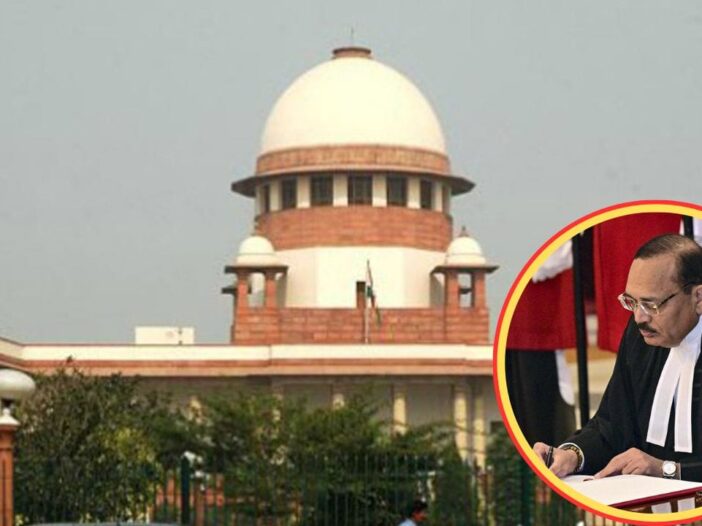
India and Russia have now taken steps towards strengthening judicial relations. An important meeting was held in Moscow between the Chief Justice of India and the Chief Justice of the Russian Supreme Court, in which a Memorandum of Understanding was signed between the Supreme Court of India and the Supreme Court of Russia in the field of judicial cooperation. Chief Justice of India Sanjiv Khanna and Chief Justice of the Supreme Court of Russia Igor Krasnov signed this MoU in Moscow.
Speaking at the Supreme Court of Russia, Chief Justice Sanjiv Khanna said that the Indian and Russian Supreme Courts, despite having evolved through different legal traditions, face a similar challenge of maintaining public confidence in the administration of justice as well as adapting to rapid technological and social changes. Emphasizing that technology should serve as a means of access to justice rather than a substitute for judicial decision making, Justice Surya Kant said India’s digital transformation in the judiciary has been guided by the objective of making courts more accessible, transparent and accountable.
1Decisions are translated into 6 regional languages
Referring to the increasing use of Artificial Intelligence in the judiciary, Justice Surya Kant said that the Supreme Court has developed tools like SUVAS i.e. Supreme Court Legal Translation Software (SUVAS) to facilitate the translation of judicial documents, under which the decisions written in English are translated into 16 regional languages. He also spoke about the recently launched AI-powered chatbot ‘Su Sahay’, which provides information to litigants, lawyers and the general public about court processes, case status and filing requirements.
‘One Case, One Data’ Initiative
Justice Surya Kant also referred to the ‘One Case, One Data’ initiative launched with the aim of creating standardized digital records for each case on judicial platforms. He said that technology is being increasingly used to promote online arbitration and conciliation, which is helping in improving efficiency, reducing costs and timely resolution of disputes. He also emphasized that the administration of justice should fundamentally remain a human endeavour.
‘Can’t evaluate evidence’
Although AI can assist judges through translation, transcription, information management and administrative support, it cannot determine verdicts, assess the credibility of witnesses, evaluate evidence or exercise judicial discretion. He referred to the recently notified draft regulations by the Supreme Court on the use of Artificial Intelligence in the Judiciary, which aim to ensure responsible deployment of AI while maintaining judicial independence and human oversight.
Also read: Situation improving, but avoid unnecessary travel to Iran…Indian Embassy issued advisory

Leave a Reply