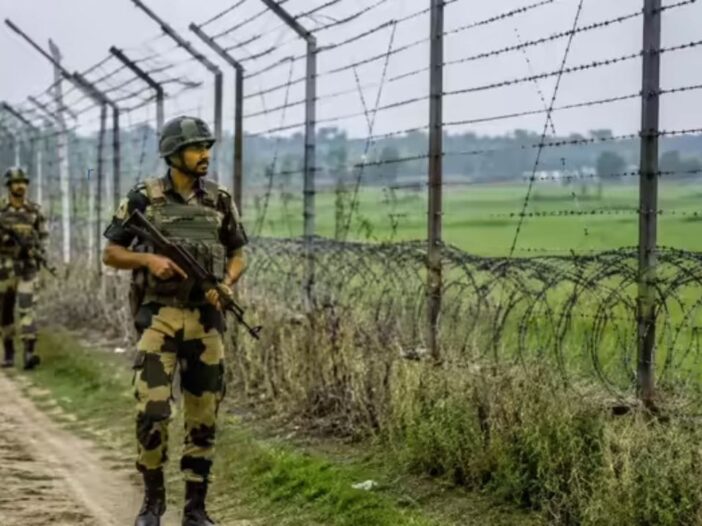
India has prepared an indigenous anti-drone system to further strengthen the security of the borders. This state-of-the-art system will soon be deployed in those border areas, where drone activities and arms smuggling incidents have seen a rise in recent years. Union Home Minister Amit Shah said that with the help of new technology the country’s borders will be made more secure and modern.
According to official sources, the central government is also working rapidly on smart border grid technology. This system will play an important role in monitoring drone infiltration, suspicious activities and cross-border attacks. Under this, smart sensors, radar, high-tech cameras and digital surveillance networks will be integrated.
Increase in drone activities
Punjab, Jammu and Kashmir and other border areas have seen an increase in drone activities for some time. In many cases, attempts to send weapons, narcotics and explosive materials through drones have come to light. Keeping these challenges in mind, the Central Government has intensified work on indigenous anti-drone technology and smart border project.
’4-Layer Security Grid’ and ‘Smart Border’
The challenges of the modern era are not limited to foot infiltration alone, but have transformed into technical and hybrid warfare. To deal with this, the central government is developing smart border grid and “impenetrable security grid”. Under this, an all-round security cordon is being prepared, which will include four pillars.
- Border Security Force (BSF) and Sashastra Seema Bal (SSB) personnel deployed in large numbers on the border.
- Modern technology anti-drone systems, smart sensors, AI-based cameras and radar.
- Local district administration and police.
- Citizens and public representatives of border areas.
vision of secure border
Home Minister Amit Shah said that border security can no longer be handled in isolation. Unless the security forces, local administration, police and public work together as a team, the vision of a completely secure border cannot be achieved.
deployed in sensitive areas
According to sources, the Smart Border project has now reached its final stage. In the initial phase, it can be implemented at seven to eight sensitive places on different borders of the country. Technical and security challenges will be assessed during the pilot project, after which there are plans to expand it to the entire range in a phased manner. The blueprint of this project has been prepared on the basis of indications received from defense sources and official visits of the Home Ministry.
Pilot phase within the year 2026: Trials of anti-drone technology and the final phase of ‘Smart Border’ scheme will be started.
First Step: It will be started from the most sensitive 7 to 8 areas of the international borders with Pakistan and Bangladesh. Which includes the advance fronts of Tripura and Rajasthan.
Next 6 to 12 months: During this period, the effectiveness of AI-powered anti-drone systems, interceptor drones, radar and smart fencing will be rigorously tested. Besides, the 119 kilometer long traditional fence, which is 15 years old, is also being replaced.
Phased expansion (target by 2027): Once the pilot project is successful and after overcoming the initial technical challenges, it will be implemented across the entire border network, especially in Punjab, Jammu and Kashmir and the North-East. The government aims to have a large part of the country’s borders fully equipped with technology-driven surveillance systems by 2027.
Local administration and 50 km radius: Under this new policy, security forces like BSF have been instructed to keep a close watch on any suspicious activity, illegal construction or demographic changes within the jurisdiction of 50 kilometers within the international border.
Preparation to make borders ‘impenetrable’
Since drones land within Indian territory, coordination between local police and village-level officials like Patwari-Sarpanch will be essential so that the internal network that receives drone-dropped weapons or narcotics can be immediately disrupted. This entire ecosystem, prepared with the cooperation of indigenous defense companies, will prove to be a milestone in making India self-reliant in the field of defense as well as making the borders ‘impenetrable’.

Leave a Reply