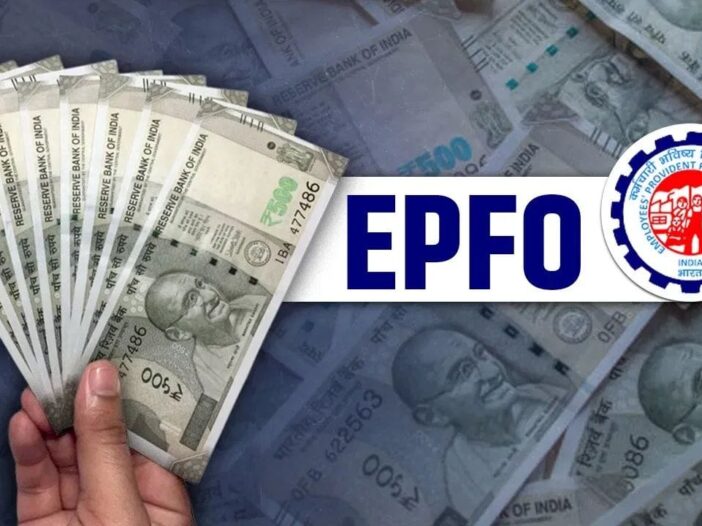
Under the new Labor Code, now employed people can increase their monthly salary i.e. ‘take-home salary’ by reducing their PF contribution. It sounds very tempting that more money will come into your bank account every month, but this will have a direct impact on your old age fund. If you do not invest the increased salary in the right place, you may face a big financial shock at the time of retirement. It is very important to understand whether it is better for you to get PF deducted or to take more salary every month.
How will the new rule increase your take-home salary?
Jaigle CEO Sudhir Kaushik says that 12% of the basic salary is deposited in the EPF account. Under the old framework, many companies used to deduct PF on the actual basic salary, or the PF was deducted on the statutory salary limit (wage ceiling) of Rs 15,000. Due to this, at least Rs 1,800 went into the PF account. Even in the new Labor Code, this mandatory contribution of 12% is applicable only up to the limit of Rs 15,000. Deducting PF on salaries above this is usually voluntary. In such a situation, by making a mutual agreement with the company, you can limit your PF contribution to Rs 1,800 every month, which will directly increase your take-home salary.
Which employees should not opt for higher salary?
According to Nisha Sanghvi, Director of Promor Fintech, this option of increasing salary is not beneficial for everyone. Certain employees should absolutely avoid making these mistakes:
- People who are completely dependent on EPF for their retirement.
- Whose company is depositing 12% of the entire basic salary in PF. If the contribution is reduced, the money received from the employer may also stop.
- Employees above 40 years of age, as they have fewer earning years left to build a retirement fund.
- Those people who do not have the habit of saving or who do not have any emergency fund.
- Employees who are afraid of the fluctuations in the stock market. At present, tax-free secured interest of 8.2% is available on EPF, which is very difficult to get in other fixed income options.
One small decision will cost you lakhs of rupees
Now let’s look at it from the point of view of statistics. Suppose, the basic salary of an employee is Rs 50,000. At the rate of 12%, Rs 6,000 is deposited in his PF account every month. Under the new rule, if he decides to deduct only Rs 1,800, his in-hand salary will increase by Rs 4,200 every month. But its mathematics in the long run is scary. If only this Rs 4,200 had gone into the PF, then at 8.25% interest rate, a strong fund of around Rs 41 to 42 lakh would have been created in 25 years.
Nisha Sanghvi says that if the company also stops its voluntary contributions, then the blow to the retirement corpus can double to around Rs 80 lakh. Apart from this, there is also the issue of tax. Due to increase in take-home salary, your income tax can also increase, whereas the money deposited in PF is mostly tax-free.
Who should take the decision to reduce PF contribution?
Financial experts believe that it is wise to cut PF only in certain circumstances. If you are burdened with an expensive loan (like a personal loan) with a high interest rate of 12 to 14 percent, then you can repay its installments by taking more salary. Repaying the 14 per cent loan early is a better financial move than earning 8.25 per cent PF interest. Moreover, this option is only good for disciplined employees who can extract higher returns from PF by investing their increased take-home salary in better places. If you cannot maintain discipline in investing, then letting your PF be deducted is the safest strategy for your future.

Leave a Reply