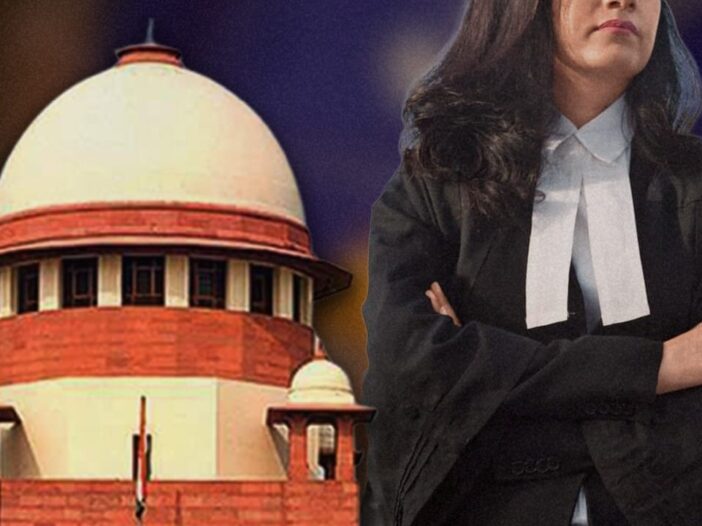
Considering the lack of basic facilities in the court premises for women advocates across the country and the need to provide financial assistance to young lawyers as a serious issue, the Supreme Court has issued a notice to the Central Government, all the states and the concerned parties. A group of women lawyers filed a petition before the court saying that in most of the High Courts, District Courts, Tehsil Courts, Tribunals and Commissions, adequate ladies bar rooms, clean toilets, changing rooms, nursing facilities and other necessary arrangements are not available for women. Due to this, women lawyers face difficulty in fulfilling their professional responsibilities.
The Supreme Court said that court premises are not only the place of hearing of cases, but are also the workplace for lawyers. In such a situation, it is necessary to provide a safe and respectful working environment for women advocates. The court acknowledged that this issue is related to the right to dignified life and work under Article 21 of the Constitution.
Suggestion of assistance fund for young lawyers
During the hearing, the court also expressed concern over the financial challenges faced by young lawyers, especially first generation advocates and those coming from economically weaker backgrounds. The Supreme Court suggested that “Young Lawyers Professional Assistance Fund” or “Young Advocates Corpus Fund” can be created, so that monthly financial assistance can be given to new lawyers in the initial years.
The Supreme Court said that in the initial years of law practice, there is no fixed source of income, due to which many talented young lawyers are forced to leave the profession under financial pressure. This also harms the judicial system. The Supreme Court, in its amended order, suggested that voluntary contributions can be taken from senior and successful lawyers.
Central and state governments should also contribute to the fund
A part of the court fees collected by the courts can be contributed to this fund. A part of the expenses incurred in judicial proceedings can also be given to the fund. Those who contribute can be given incentive schemes like tax exemption and honours.
For how long will the assistance last?
The court suggested that young lawyers could be given adequate monthly assistance for the first three years. After this, this assistance should be gradually reduced and abolished in about 6 to 7 years, so that by then the lawyers can become self-reliant and start independent practice.
The Supreme Court also suggested that the lawyers availing this assistance can later return the contribution to the fund in installments when their position becomes stronger, so that this system can become self-reliant. However, the court clarified that all these suggestions are preliminary and illustrative and other options can also be considered after consultation with the parties concerned.
Considering the importance of the case, the court has asked the Advocates General of all the states, the Attorney General of the Central Government and the permanent advocates of the Union Territories to be present in the next hearing.

Leave a Reply