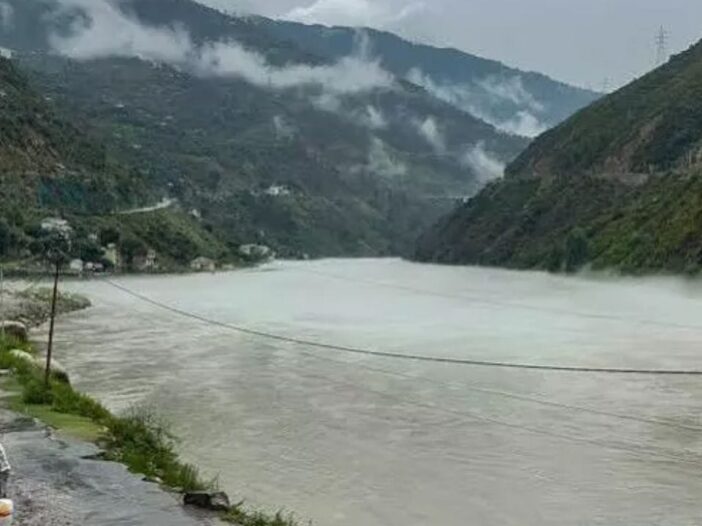
Due to increase in the water level of Chenab river in Punjab province of Pakistan, flood like situation has arisen. Amid heavy rains, the protective embankment of Chenab river broke in Bet Parara area of Liaquatpur, due to which many nearby areas were flooded. Relief and rescue operations are being conducted here.
According to sources, in the last 6 days, about 19 crore cusecs of water has flowed from India to Pakistan through Chenab river. Due to continuous heavy rains in India and rise in water level in the upper catchment areas, excess water was released from dams and barrages, the effect of which was also seen in the lower areas of Pakistan.
Indus Water Treaty was postponed
It is noteworthy that after the Pahalgam terrorist attack, India had postponed the Indus Water Treaty. Earlier, under the treaty, India had to give advance notice to Pakistan before releasing water into western rivers, especially Chenab river, so that it could prepare to deal with possible flood situation.
However, India has clarified that there is no deliberate action behind the current flood-like situation in Pakistan. India says that due to continuous heavy rains in the country, it was necessary to release excess water from reservoirs and barrages and this was done entirely due to natural conditions. India has also reiterated that after the suspension of the Indus Water Treaty, it is not obliged to give advance information to Pakistan regarding the release of water.
What is India’s stand?
India has rejected Pakistan’s allegation that it deliberately caused floods in the Chenab river. India says the rise in water level was the result of heavy monsoon rains in Jammu and surrounding areas. The Foreign Ministry said that Pakistan’s own flood warnings also confirm this and termed Islamabad’s claims as false based on facts. India also reiterated that the Indus Water Treaty will not be implemented unless Pakistan stops supporting cross-border terrorism, and also said that important information related to floods will have to be shared through diplomatic channels on humanitarian grounds.

Leave a Reply