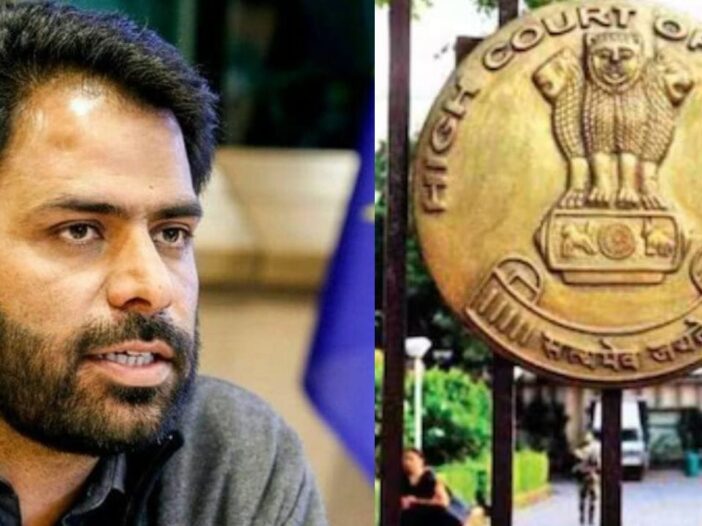
Delhi High Court on Wednesday granted bail to Kashmiri human rights activist Khurram Parvez. The National Investigation Agency (NIA) had registered a case against Khurram and arrested him on charges of alleged terror funding, conspiracy and recruiting people for the terrorist organization Lashkar-e-Taiba (LeT). Now Delhi High Court has granted him bail in the case of Unlawful Activities Prevention Act (UAPA).
It is being told that this case was heard by the Division Bench of Justice Naveen Chawla and Ravinder Dudeja. Who has granted bail to Khurram Parvez with some conditions. Actually, Parvez was arrested by NIA on November 22, 2021. The trial court refused to grant bail to Parvez on December 17, 2024. After which Parvez had approached the Delhi High Court on December 24, 2024.
According to the NIA, Khurram Parvez was part of a larger conspiracy related to Lashkar-e-Taiba, whose objective was to wage war against India by supporting terrorist activities through a network of overground workers. Investigators claim he recruited operatives, gathered information about security forces and military targets and played a role in instigating protests after the killing of terrorist commander Burhan Wani in 2016.
Parvez said- I am a human rights activist
Parvez argued that he is a human rights activist and was the program coordinator and spokesperson of Jammu Kashmir Coalition of Civil Society (JKCCS). He was also the chairperson of the Asian Federation Against Involuntary Disappearance (AFAD) based in the Philippines, which runs a campaign on the issue of forced disappearance.
No contact with LeT
In his appeal, Parvez said that he was actually unaware of the conspiracy and investigators have failed to prove any link between him and LeT operatives or members of any banned organization. He said that examination of the digital devices seized from him did not reveal any evidence of any conversation with the alleged handler or recruitment of overground workers.
Parvez denied NIA’s allegations
Parvez also rejected allegations against him that his previous visits to Pakistan showed his links with banned organizations. He said the trips were undertaken publicly as part of humanitarian and advocacy initiatives, including campaigns against landmines and enforced disappearances.

Leave a Reply