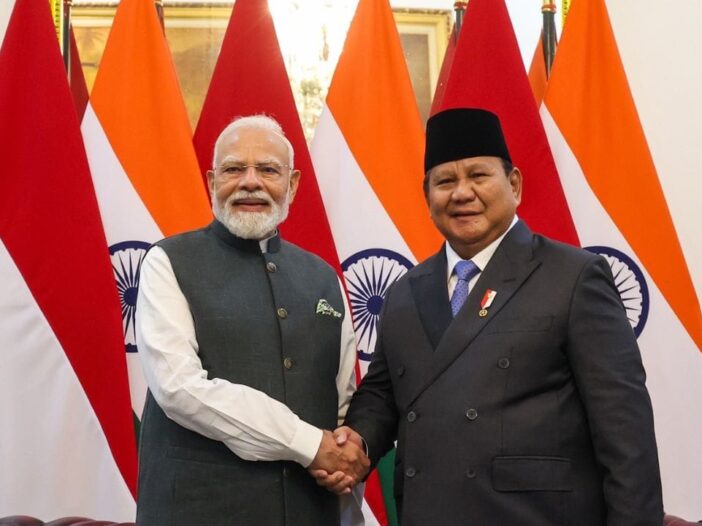
India and Indonesia have taken a big step towards taking economic and digital cooperation to new heights. In a joint statement issued between Prime Minister Narendra Modi and Indonesian President Prabowo Subianto, both the countries have agreed to pursue cross-border QR payment link and Local Currency Transactions (LCT) i.e. direct transactions in Indian Rupee and Indonesian Rupiah.
According to the joint statement, local currency payments and cross-border transactions between the Reserve Bank of India (RBI) and Bank Indonesia QR payment system Work is going on rapidly towards implementation. Both the countries say that this will make the payment system faster, cheaper and safer, and will also give a new impetus to trade and investment.
What is cross-border QR payment?
Currently, if an Indian tourist makes a purchase in Indonesia, the payment process is through international card network or US dollars. Due to this, foreign currency exchange and banking charges are levied separately. After the implementation of the new system, Indian tourists will be able to make payment by scanning Indonesia’s QR code through UPI used in India. Similarly, Indonesian citizens will be able to make payments through their country’s QR system when they come to India. Payment will be in the local currency of both the countries and the need for dollars will be eliminated to a great extent.
What is Local Currency Transaction (LCT)?
LCT means that trade payments between India and Indonesia can be made directly in Indian Rupee and Indonesian Rupiah. Currently most of the international trade is done through US dollars. That is, the Indian importer first converts rupees into dollars and then the dollars are converted into rupees. This increases additional costs and exchange rate risk. With the new system this process will be simplified because payment can be made directly in the currencies of both the countries.
Who will benefit the most?
1. Tourist
- Indian tourists will have less need to carry cash dollars for payments in Indonesia
- Extra cost of currency exchange will be saved.
- Payment can be made immediately by scanning QR.
2. student
Fees and daily payments will be easier for Indian students studying in Indonesia and Indonesian students studying in India.
3. Traders and MSME
- Small and medium industries will not have to depend on the dollar.
- Transaction costs will decrease.
- Payment will be faster, due to which business is likely to grow.
4. Investor
- Payment in local currency will reduce the risk of foreign currency fluctuations.
- Investment between the two countries will be encouraged.
Strategic importance for India
This move is part of India’s policy to promote digital public infrastructure (DPI) and international trade in local currency. In recent years, India has taken initiatives to increase trade in UPI and local currency with many countries. This arrangement with Indonesia will further strengthen India’s economic and digital presence in South-East Asia.
In a joint statement, both the countries have said that cross border QR payment linkage and local currency transactions will create new opportunities for trade, investment, tourism, students and MSME sector. Besides, this will strengthen financial integration between the two countries and promote inclusive economic development.
Dependence on US dollar will be less
The arrangement for Rupee-Rupiah trade between India and Indonesia will not only make payments easier, but can also reduce the dependence on the US dollar in bilateral trade. If import-export payments start being made directly in rupees and rupiah, then businessmen will not need to first buy dollars and then convert into other currencies. This will reduce transaction costs and also reduce exchange rate risk.
This initiative has come at a time when many emerging economies including BRICS are promoting the use of local currencies in mutual trade. Although there is no direct mention of the dedollarization policy of BRICS in the India-Indonesia agreement, the arrangement for trading in local currency is considered to be in line with the broader global trend of reducing dependence on the dollar.
India’s participation in the development of Sabang Port
In the joint statement, Indonesia welcomed India’s participation in the development of Sabang Port. Both countries have agreed to work further on the design, financial model and implementation of this project. Sabang Port is located in the Aceh province of Indonesia and is very close to the entrance of the Strait of Malacca. The Strait of Malacca is one of the busiest maritime trade routes in the world. A large number of oil and cargo ships going from West Asia to East Asia pass through this route. Therefore, the strategic and economic importance of this area is considered very big.

Leave a Reply