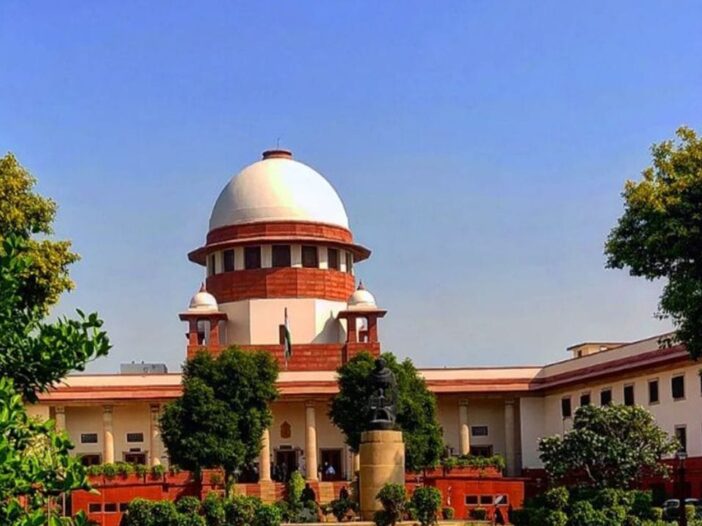
The Supreme Court has said that an accused cannot be denied access to the documents forming part of the charge sheet, because doing so can seriously harm his right to a fair trial. This comment was made by the bench of Justice JK Maheshwari and Justice AS Chandurkar. The bench directed that typed copies of some top secret documents be provided to retired Major General VK Singh, who is facing trial in a case registered in 2007 under the Official Secrets Act of 1923.
The Supreme Court said that the case of the Central Bureau of Investigation (CBI) is not that the documents sought by Singh are irrelevant to the case. It said that the only objection of the prosecution was that these documents are highly confidential from the point of view of national security and there is a possibility of them becoming public if their copies are made available. Singh has also been an officer of the country’s intelligence agency RAW.
The bench, in its order dated May 18, said that it is settled law that an accused cannot be denied access to the documents forming part of the charge sheet. Which also includes general diary documents. It also provides that those documents must have been obtained in good faith, are relevant to the case of the prosecution and their disclosure is considered necessary by the Public Prosecutor in the interest of justice and fair trial.
What did the Supreme Court say?
The Supreme Court said that this is because withholding such documents can seriously harm the right of the accused to a fair trial.
The court gave this order on Singh’s petition, in which he had challenged the order given by the Delhi High Court in September last year. The High Court had modified the December 2009 order of the trial court, in which the prosecution had been directed to provide copies of the documents sought by Singh.
Singh had filed an application in the subordinate court under Section 207 of the Code of Criminal Procedure (CrPC) seeking direction to the prosecution to provide certain documents which were part of the charge sheet but were not given to him. While considering the petition, the Supreme Court said that in our opinion these documents are part of the charge sheet and are being used against the accused, hence they should be made available to the appellant (Singh). The bench said that while balancing the right of the accused to a fair trial, which is an important aspect of the fundamental right to life and personal liberty under Article 21 of the Constitution, with national security and sovereignty, it asked the law officer appearing for the CBI to submit a similar proposal.
The lower court amended the order
The bench noted that during the hearing, the law officer had said that he would provide typed copies of the documents, but with the condition that Singh would use them only for court proceedings and the documents would not be disseminated in any way, especially in electronic or print media or social media platforms.
The bench said that in view of the above circumstances, the order of the High Court is canceled and the order of the lower court is amended. The CBI had registered a case against Singh in September 2007 on the basis of a complaint. The allegation was that he had disclosed confidential information by publishing his book India’s External Intelligence- Secrets of Research and Analysis Wing.
Read this also- Handwash Mistakes: Wash hands repeatedly and still fall ill? These mistakes can be the reason

Leave a Reply