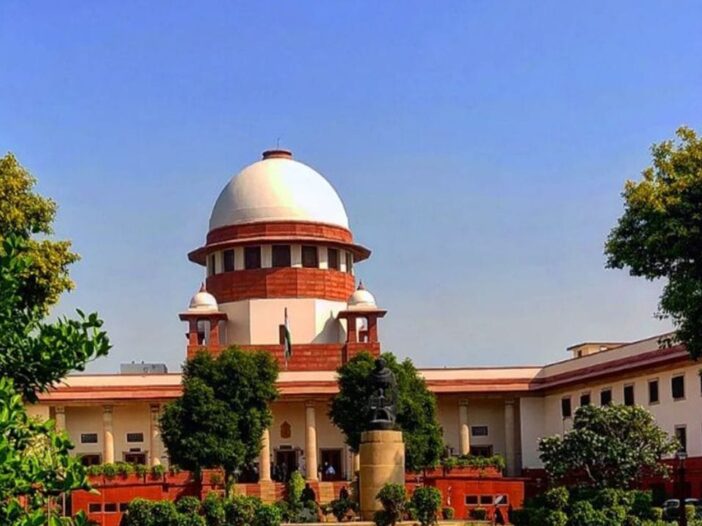
The Supreme Court, in its important judgment on the Immoral Traffic (Prevention) Act 1956, enacted 70 years ago, made it clear that the purpose of this law is not to completely eliminate prostitution or to automatically declare it a crime, but to ban its commercialization, trafficking and exploitative networks. The court says that the purpose of this law is to maintain decency and social order in public places. Besides, it also prohibits exploitation of women.
A two-member bench of Justice JB Pardiwala and Justice R Mahadevan said that the basic objective of this law (Immoral Traffic Prevention Act 1956) is to maintain control over running prostitution as an organized business and the exploitative system associated with it. The court said that this law is to control those who take commercial advantage of this activity. This law is not just to punish women engaged in prostitution.
While hearing the case related to the rehabilitation of women rescued from brothels, the country’s highest court also examined the historical context of the law. The court said that trafficking of women and girls was a widespread problem in the early 20th century and at that time society viewed prostitution as an immoral activity.
Prostitution near public-educational institutions punishable
The 298-page judgment written by Justice Pardiwala said that Sections 7 and 8 of the law are exceptions to the general rule. Section 7 makes prostitution punishable near public places, educational institutions or notified areas, while Section 8 criminalizes luring or soliciting customers in public places.
The bench said that the purpose of these provisions is to maintain public decency, social order and convenience of common citizens. Therefore, the law also controls individual activities in certain special circumstances. Due to this social and legal background, the word ‘immoral’ was included in the name of the law. The court said that ITPA was created primarily to take action against smugglers, pimps and exploitative criminals and not to punish women engaged in prostitution.
The Supreme Court said that it is neither declaring prostitution completely a crime nor advocating leaving it completely uncontrolled. According to the court, the basic objective of the law is not to condemn every act related to prostitution, but to prevent exploitation and commercial exploitation.
Court fixed the definition of brothel
The most important part of the decision is related to the definition of brothel in the Act. The Court clarified that if a woman practices prostitution for livelihood in her own home alone, there is no other woman involved and there is no role of any pimp, middleman or outsider, then such residence will not be considered as a brothel in the eyes of law.
The court also said that such a house being used alone by a woman cannot be declared a brothel merely on the basis that she is earning her livelihood from there. This interpretation clarifies the legal limits of the ITPA and its actual purpose.

Leave a Reply