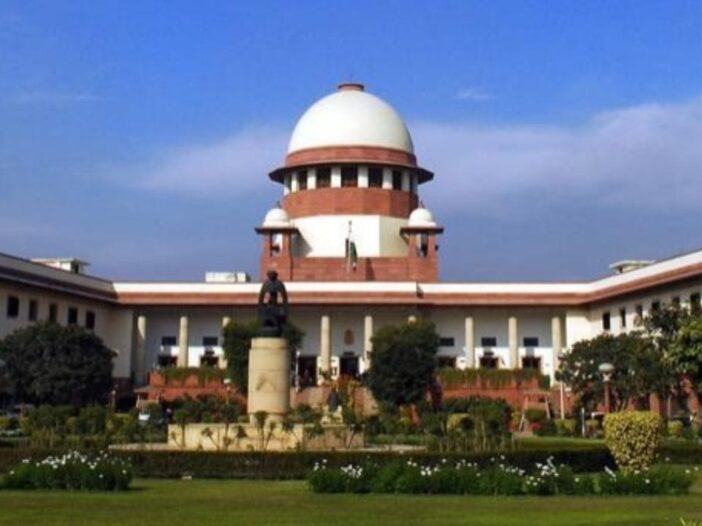
The Supreme Court adjourned the hearing on the matter related to delay in appointment of members and infrastructure in the National Company Law Tribunal (NCLT), saying that the appointment process is currently going on. A bench of Chief Justice Surya Kant and Justices Joymalya Bagchi and V. Mohana on Monday adjourned the hearing of the suo motu case related to the delay in the appointment of judicial and technical members in the NCLT and deficiencies in its infrastructure.
During the hearing, an advocate drew the bench’s attention to the fact that the suo motu proceedings are not limited to vacancies in the NCLT, but also include issues related to inadequate infrastructure and rate of disposal of cases in the tribunal.
Proceedings were registered on May 19
On this the Chief Justice said, my colleagues (judges of the second bench) have raised the right issue. This is a serious matter of concern. This suo motu proceeding titled appointment of judicial and technical members and inadequate infrastructure and other related issues in the National Company Law Tribunal (NCLT) was filed on May 19. This action started on April 29 after the High Court’s decision in the AVJ Heights Apartment Owners Association vs IIFL Finance Limited case.
In that decision Justice J. B. Pardiwala and Justice K. V. Vishwanathan had expressed serious concern over the continuous delay in approving resolution plans under the Insolvency and Bankruptcy Code (IBC). Describing it as a serious situation, the bench took suo motu cognizance and referred the matter to the Chief Justice for appropriate directions, after which the present proceedings were registered.
What is the effect?
In this April 29 decision, it was said that 383 applications related to approval of resolution plans were pending before the NCLT. These delays ranged from 48 days to 738 days and in some cases it reached almost four years.
The bench had said that such a delay defeats the very purpose of the IBC as it affects the objective of ensuring time-bound insolvency resolution, preserving the value of assets and promoting economic efficiency.

Leave a Reply