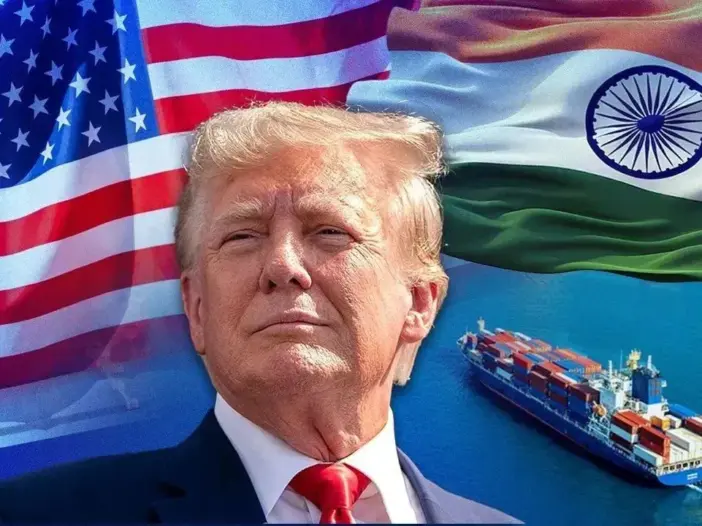
The United States Trade Representative (USTR) released the results of 60 Section 301 filings on Wednesday. In this, it has been proposed to impose an additional tariff of 12.5 percent on India as well as 53 such countries, which have failed to ban the import of goods made through forced labor and to implement it effectively. This comes at a time when the US’s chief negotiator is holding three-day talks with his Indian counterparts in New Delhi to finalize a bilateral trade agreement.
An official has been quoted in the media report as saying that New Delhi will keep the main focus of the talks on getting relief from Section 301 filings and getting lower tariffs than its competitors. The official said that India will try to seal the deal provided it gets “fair, equitable and balanced terms”. He also said that once the broad outlines of the agreement are finalized, US Trade Representative Jameson Greer may visit India.
What are the arguments in the USTR report?
According to a Bloomberg report, India has denied the allegations made under the forced labor provision and has asked Washington to end these investigations. India says these issues should be resolved within the framework of ongoing trade negotiations, rather than through unilateral measures.
USTR said in a notice that for countries that have prohibited the import of goods manufactured using forced labor, or have committed to establish and enforce such a prohibition through ‘reciprocal trade agreements’, or for economies that have implemented a partial regime that prevents the import of certain goods manufactured by forced labor, the US Trade Representative has proposed to keep the additional duty rate at 10%.
For other countries, USTR has proposed to keep the additional duty rate at 12.5 percent. Along with this, there is also a proposal for a ‘Textile Mechanism’, under which the tariff imposed under Section 301 will be imposed at a lower rate on a certain volume of clothing and textiles coming to America from certain economies. This trade organization has also decided to propose retaliatory action in connection with these investigations.
What is Section 301?
Section 301, which is part of the US Trade Act, 1974, is a trade enforcement tool. It gives USTR the authority to investigate the actions, policies, and practices of foreign governments, and determine whether those actions, policies, and practices are unfair or discriminatory, and whether they burden or restrict US trade. If a government investigation concludes that unfair trade practices exist, this section allows the US to respond by imposing additional tariffs or other trade-related measures on the country in question. The move, announced on Wednesday, is a major step forward in US President Donald Trump’s effort to reimpose country-wide tariffs that he imposed in his first year in office but were later declared unconstitutional by the Supreme Court.
Review of new US tariffs
The US government agency informed that these new fees will not be implemented immediately. Before implementing these, public comments will be taken and reviewed. As a result, any fees may be subject to change before they are officially implemented. According to the notice, written comments are to be submitted by July 6, and the Section 301 panel is expected to begin public hearings from July 7.
Greer said in a statement that the failure by our most important trading partners to stop the import of goods made with forced labor is unacceptable. This creates a situation where American workers are forced to compete in an unequal competitive environment on a global level. He further said that we will no longer tolerate this inequality. Greer also said the goal is to complete a series of trade-related investigations so Trump can impose new tariffs as quickly as possible after the existing measures expire.
What about India in this investigation?
The USTR report alleges that New Delhi has failed to effectively enforce a ban on the import of goods made with forced labour. The agency also alleged that the failure to impose and effectively enforce the ban is “unreasonable,” and that it burdens or restricts US trade. Greer called on all trading partners to “ensure that trade does not unfairly encourage or reinforce forced labor globally.”

Leave a Reply