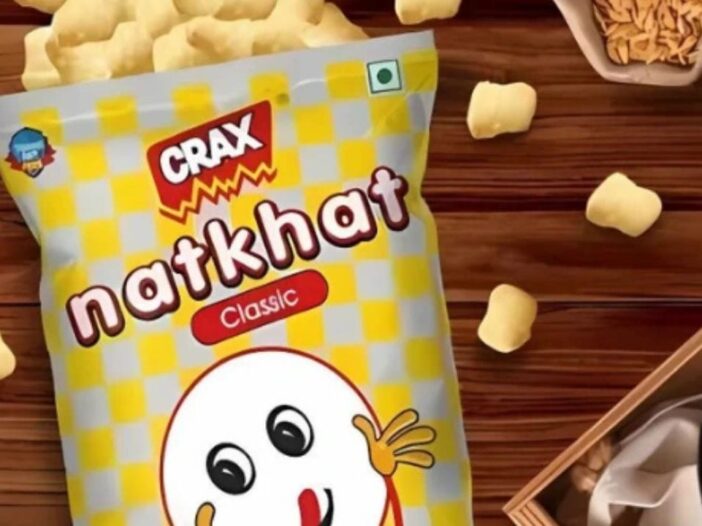
The snacks market for children and adults in the country is quite big. Especially the company making snacks for children is continuously progressing. One such snack ‘Natkhat’ is becoming famous in the entire market. The main reason for this is the sale of the company making this snack. In fact, US private equity firm ‘Advent International’ is preparing to exit ‘DFM Foods’, the company making ‘Natkhat’ and Cracks. This means that it is preparing to sell its stake. For this, many big companies of the country have lined up. The special thing is that the American firm’s stake in the company is about 97 percent. Which she will sell completely. For this, the American firm has also started talks with some companies.
Talks are going on with which companies?
Advent ITC is in talks with consumer goods companies like Marico, Britannia, Lotte and Liwayway Foods. Liwayway Foods manufactures South Asian snack brand ‘Oishi’. Officials said that the PE firms involved in the talks also include Kedaara Capital and CVC Capital Partners. ADVENT has approached potential buyers, including both strategic and private equity firms, and talks are currently underway, an official said in the ET report. He said that it is expected that this deal will be completed by December.
Avendus Capital had purchased the company in 2019
Advent has appointed Avendus Capital and EY for this potential deal. This PE firm had purchased a major stake in DFM Foods from WestBridge Capital in 2019 for $118.8 million. In January 2023, Advent delisted DFM. According to the company’s recent annual report, total sales of DFM Foods increased by 27.5 percent to Rs 705.8 crore in FY 2025. Without giving much information, another official said that the growth of the company in the financial year 2026 was more than 30 percent. However, no statement has come forward from any of the potential buyers so far.
The company is 42 years old
Established in 1984, DFM Foods, apart from its main brand ‘Cracks’, also produces snacks like Curls, Fritts and Natkhat. These snacks come in formats like potato chips, traditional snacks and millet based varieties. According to the company’s website, its factories are in Ghaziabad, Greater Noida, Kashipur and Howrah. “Apart from the valuation, which is still being decided, the potential deal will depend on the brand’s scale and distribution strength, as well as how well the brand can bridge the gap between ‘indulgent’ and ‘healthy’ snacking, as consumers are increasingly inclined towards it,” said the third executive.
Rapidly changing packed snacks market
India’s packed snacks market is changing rapidly. Competition is increasing in this and the number of digital-first and regional brands is increasing. This is being fueled by quick commerce, new investments (capex) by existing companies and demand for health-and-wellness snacks. Due to these reasons, a rise in mergers and acquisitions is also being seen. According to EY’s Merger and Acquisition India Report 2026, the highest number of 393 deals were done in the consumer products and retail sector in 2025, followed by 354 deals in the technology sector.
Continuously increasing interest in snacks market
Since March 2025, four external investors have bought stake in Haldiram Snacks Food. Which includes L Catterton, Temasek, Alpha Wave Global and Abu Dhabi’s International Holding Company (IHC), backed by former Hindustan Unilever CEO Sanjeev Mehta. With these investments, the valuation of India’s largest snacks manufacturing company has increased to more than $10 billion.
At the same time, in May this year, Advent bought a large minority stake in frozen food manufacturing company Iscon Balaji Foods for $ 150 million. Earlier this year, another global PE firm, General Atlantic, bought 7 per cent stake in Gujarat-based packed snacks maker Balaji Wafers for about Rs 2,500 crore, valuing Balaji Wafers at Rs 35,000 crore.
According to a report by research firm IMARC Group, the Indian snacks market, which was valued at Rs 50,590 crore in 2025, is expected to reach Rs 1,03,556 crore in terms of annual sales by 2034. It will grow at a compound annual growth rate (CAGR) of 8.28 percent.

Leave a Reply