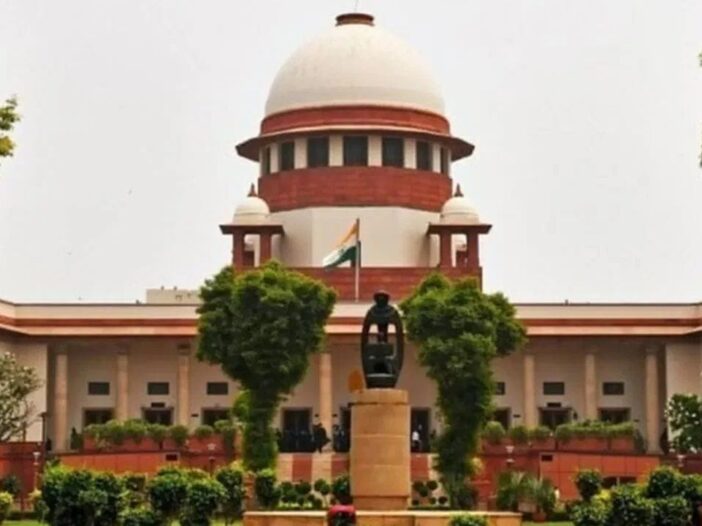
A doctor couple from Rajasthan got married in December 2007. The wife is working in a government job in Gujarat and the husband is in Rajasthan, whose divorce case reached the Supreme Court after the High Court. In February last year, the High Court had accepted the husband’s appeal and granted permission for divorce. The High Court had granted divorce in favor of the husband on several points. One of the reasons for granting divorce was that the wife had refused to have sexual relations on several occasions, which in the view of the High Court was cruelty towards the husband. Now in this case, the Supreme Court made a big comment while ending the marriage between a couple who had been living separately for 15 years. The court said that due to long pending matrimonial cases, marriage remains only on paper.
In this case, the bench of Justice Sanjay Karol and Justice Augustine George Masih said that the courts of India have repeatedly established that maintaining distance from sexual relations creates severe emotional stress and weakens the foundation of marriage. Therefore the conclusion of the High Court is upheld. The divorce decree (order) given accepting the appeal of the respondent-husband is upheld. Let us know what else the Supreme Court said in this matter.
- The Supreme Court said that in many of its decisions it has been held that depriving various conjugal rights including persistent refusal of sexual relations without any valid reason comes in the category of mental cruelty. Also, it is a valid ground for divorce under Section 13(1)(ia) of the Hindu Marriage Act. The doctor couple got married in December 2007. The wife is working in government service in Gujarat and the husband is working in Rajasthan.
- The court, using its powers under Article 142 of the Constitution, said that it was appropriate to dissolve the marital bond between the couple as it was clear that the bond had completely broken down and there was no scope for it to be restored. The Supreme Court gave its verdict on June 2 on the wife’s appeal against the order given by the High Court in February last year. The High Court had accepted the husband’s appeal and granted permission for divorce.
- The Supreme Court in its decision found that both the parties were living separately for more than 15 years and they did not have any children. Not only this, despite repeated efforts by the courts, no reconciliation took place. The bench said that marriage in its legal and constitutional dimension can never be reduced to a mere contractual union of individual rights nor can it be viewed from the narrow perspective of a petition for marital rights.
- The court said that marital rights do not exist unilaterally and they are structural counterparts of marital duties. It said continued departure from basic aspects of marriage when evaluating allegations of mental cruelty could lead to legal consequences. The bench said that in this case it was clear from the conduct of the parties that they had failed to fulfill their marital responsibilities even during the short period of cohabitation.
- The court said that this court is conscious of the view that the attitude of the courts should be to preserve the sanctity of marriage and the court should hesitate in granting divorce merely on the request of one of the parties. In this case, the couple had been living separately for a very long time and there was no sanctity left in this marriage. Although it was claimed by the wife that she had left her job in Gujarat and started living in Rajasthan, there is no evidence on record to corroborate this claim.
- The bench said, on the contrary, the evidence on record contradicts this contention and there is no dispute that she (the wife) is still continuing her employment in Gujarat. There does not seem to be any intention from her side to live with her husband, because there is a difference between words and actions. The bench dismissed the appeal filed by the wife and dissolved the couple’s marriage.

Leave a Reply