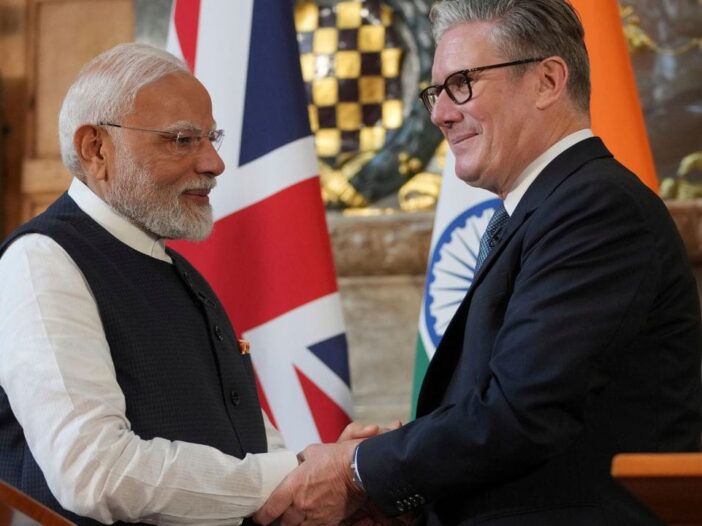
Scotch whisky, gin, chocolate, biscuits, cosmetics and many other British products will become cheaper in your country after the tariff cuts begin from July 15, 2026 under the Free Trade Agreement between India and the United Kingdom, although the reduction for some products will be implemented gradually in the coming years.
Indian exporters will get almost complete tariff-free access to the UK market. It will have zero-duty facility on almost 99 percent tariff lines, which cover almost the entire export value of India. The India-UK Comprehensive Economic and Trade Agreement (CETA) will come into force on July 15, 2026, almost a year after it was signed.
This agreement, signed on July 24, 2025, was reached after 14 rounds of negotiations. This is expected to reduce duties on many types of goods, improve market access and provide more certainty for businesses doing business between India and the UK.
This 30-chapter agreement includes much more than traditional tariff reductions. This includes areas like digital trade, telecommunication, financial services, intellectual property, innovation, SME, sustainability, transparency and government procurement.
Indian professionals working in UK will also get the benefit of social security relief, because ‘Double Contribution Convention’ is also coming into effect from July 15. This will exempt eligible temporary employees from paying social security contributions in both the countries for a fixed period of time.
India-UK trade crosses $25 billion
- This agreement has come at a time when mutual trade between India and the UK has increased, although India’s trade surplus (export-import gap) with London reduced significantly in 2025-26, as imports grew faster than exports.
- According to Commerce Ministry data, India-UK goods trade is expected to increase from $17.48 billion in 2021-22 and $23.13 billion in 2024-25 to $25.13 billion in 2025-26.
- India’s exports to UK stood at $13.44 billion in 2025-26, which was $14.55 billion in 2024-25. That year, UK’s share in India’s total goods exports was 3.04 percent.
- Imports from UK increased rapidly to $11.68 billion in 2025-26, which was $8.58 billion a year ago, i.e. an increase of 36.11 percent.
- As a result, India’s trade surplus with the UK declined to $1.76 billion in 2025-26, compared to $5.97 billion in 2024-25.
Textile, gems and engineering goods benefit
- Indian exports will be exempted from duty on almost 99 per cent of tariff lines, covering almost 100 per cent of the trade value.
- It is believed that labor intensive sectors like textiles, marine products, leather, footwear, sports goods, toys and gems and jewelery will benefit the most.
- Other major export products such as engineering goods, auto parts and engines, and organic chemicals are also expected to benefit from better market access.
- The removal of tariff barriers is expected to help Indian exporters compete better in the UK market, where suppliers from some other countries already enjoy preferential access.
UK exporters got entry into the Indian market
On the other hand, India will reduce or eliminate tariffs on 90 percent of tariff lines. 85 percent of these lines will become completely duty-free within a decade. The UK government estimates that tariffs on British exports to India will immediately fall by about £400 million. After 10 years, when the tariff cuts are fully implemented, this will rise to around £900 million a year. There is an estimated reduction of about 220 million pounds in duty on imports from India to UK.
Main benefits of whiskey and automobile for UK
- British whiskey and gin exporters will benefit the most. The tariff on whiskey will initially be reduced from 150 percent to 75 percent and then to 40 percent over 10 years.
- Automobile exporters will also benefit from the quota-based system. The tariff on fully built vehicles from the UK, which is currently up to 110 per cent, will gradually reduce to 10 per cent over 10 years under the quota framework.
- Entry into India for British electric and hybrid vehicles will also be phased and under quota, to protect India’s domestic automobile industry while moving towards electric mobility.
- British food and drink exporters will also benefit. Under this agreement, tariffs will be reduced in India on products like chocolate, sweet biscuits and soft drinks.
FTA is expected to increase trade by 25.5 billion pounds
- According to the UK Government’s assessment of the India-UK FTA, this agreement will reduce tariff barriers, improve market access and increase bilateral trade in goods and services.
- According to estimates, UK exports to India may increase by about 60 percent in the long run. This would equate to an additional £15.7 billion of exports by 2040 compared to the no-FTA situation.
- UK imports from India are expected to increase by 25 per cent, adding around £9.8 billion, while total bilateral trade could increase by around 39 per cent, or around £25.5 billion annually.
- The UK estimates that this agreement could increase its GDP by 0.13 percent by 2040, which is equivalent to about 4.8 billion pounds annually compared to the no-deal situation.
Protection of sensitive agricultural areas under the agreement
India has kept sensitive agricultural products like dairy products, apples and cheese out of tariff concessions under the FTA, so that domestic farmers can be protected from increasing competition from imports. Other sensitive products such as sugar, milled rice, pork, chicken and eggs are also protected through exemptions or special provisions under the agreement. India’s dairy sector has been protected in recent trade agreements because of its importance to small farmers and rural livelihoods.
Promises related to services, movement of people
This deal includes promises related to digitally provided services, temporary movement of professionals and intellectual property. India has achieved provisions on digital trade that are expected to help Indian IT and IT-enabled services exporters. UK is one of India’s largest markets for export of technology services.
The Social Security system through the ‘Double Contribution Convention’ will also be a big benefit, as the contributions earlier going to the British Social Security system will now be deposited into their Provident Fund (PF) accounts in India.
Commerce Minister Piyush Goyal recently said that employees can save about 25 percent of their salary, which was earlier given as UK Social Security Contribution. Besides, this amount will also earn interest in their PF accounts.
At the same time, UK has achieved better access for its companies in India’s government procurement market under stipulated conditions. Under the ‘Make in India’ procurement framework, British companies will get ‘Class 2’ supplier status if at least 20 per cent of their product or service comes from the UK.
Exporters will have to keep these things in mind
Although the FTA will provide broader market access, exporters want more clarity on steel shipments, particularly the quota system and its coordination with the UK’s separate steel measures.
India has indicated that under the agreement it will get preferential access to about 85 percent of steel tariff lines, and quotas will also be given for some categories. However, exporters want clarity regarding the size of the quota, product coverage and allocation process.
Measures related to steel will be applicable separately from FTA. Exporters will also have to keep an eye on the UK’s Carbon Border Adjustment Mechanism (CBAM), which is outside the scope of the agreement.
The UK’s CBAM, which will come into effect from January 1, 2027, will cover sectors like iron and steel, aluminium, cement, fertilizer and hydrogen. Under this, exporters will have to follow additional carbon reporting and cost related requirements.

Leave a Reply